
Sony WF-1000XM6 Review: The Best Wireless Earbuds for Android Users?
By Ryan Castillo | Tech & Electronics Editor, PluggedInPicks • May 18 2026
Tested over 4 weeks — daily commute ANC evaluation across five environments, LDAC audio quality across multiple source types, call quality across three conditions, fit and comfort across extended wear sessions, and battery endurance testing.
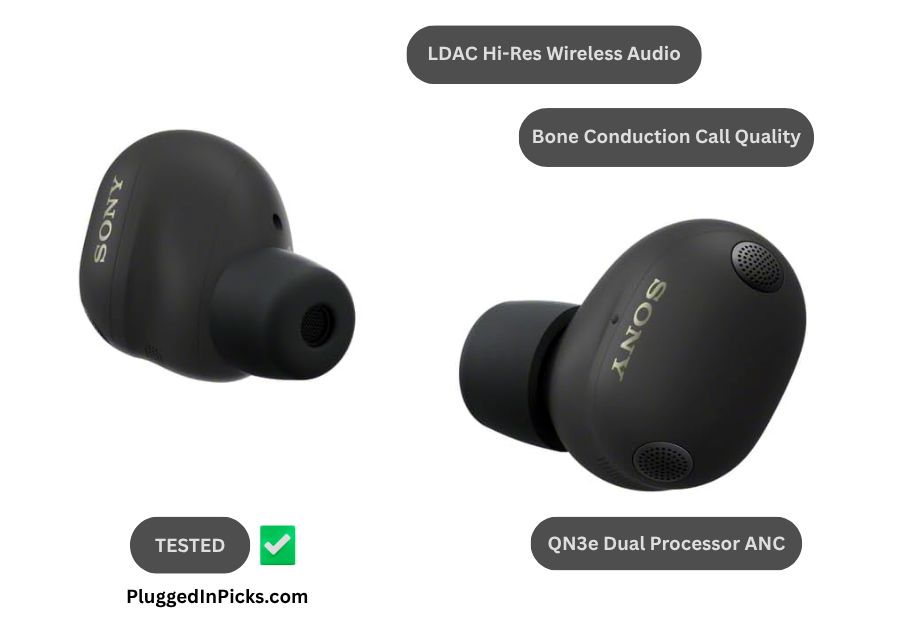
Most premium earbud buyers land at the same decision point eventually. The Apple ecosystem pulls in one direction. The Android and lossless audio world pulls in another. The Sony WF-1000XM6 is the answer for the buyer who already knows which side they’re on and wants the best available in that lane without compromise.
After four weeks of daily testing, here is what the QN3e processor, eight adaptive microphones, bone conduction sensor, and redesigned pressure-relieving vents actually produced in real conditions. And one honest ownership caveat worth knowing before you buy.
Quick Verdict ⭐ 4.3 / 5
The Sony WF-1000XM6 delivers ANC that handled every indoor environment in our four-week testing window without adjustment, LDAC for buyers who need lossless wireless audio, call quality anchored by a bone conduction sensor that held up where most earbuds fall short, and a pressure vent redesign that eliminates the jaw rumble issue that dogged the prior generation. For Android users and LDAC buyers, this is the earbud the platform deserved.
Buy this if: You are an Android user who wants flagship ANC and LDAC in a single earbud, take calls regularly in noisy environments, or upgraded from the XM5 earbuds and the jaw rumble issue was a daily frustration.
Skip this if: You are an iPhone user with no LDAC requirement, need more than four ear tip sizes, or want a product with mature firmware already behind it before purchasing.
How We Tested:
Four weeks of daily use structured around the dimensions that matter most for the buyer this earbud is built for.
Daily commute ANC evaluation across five environments: Train, open office, coffee shop, outdoor wind, and a crowded venue. The same five-environment sequence used across every earbud in this cluster for directly comparable results.
LDAC audio quality testing: Streamed lossless audio from Tidal HiFi across a range of genres including orchestral, electronic, and acoustic, with LDAC active throughout. Evaluated detail retrieval and soundstage at high bitrate versus standard AAC on the same source material.
Call quality across three conditions: Quiet home office, moderately noisy coffee shop, and outdoors on a windy day. Cross-referenced caller feedback without prompting across all three environments to evaluate the bone conduction sensor and dual beamforming microphone performance in practice.
Extended wear sessions: Logged sessions up to 8 hours across multiple days, tracking fit security across all four foam tip sizes, eartip seal consistency, and whether the new pressure-relieving vents resolved the jaw movement artifact reported in the prior generation.
Battery endurance test: Ran continuous playback from a full earbud charge at moderate volume with ANC active throughout to verify the 8-hour claim.
Firmware and connectivity evaluation: Logged connectivity behavior, pairing stability across Android and MacBook, and any firmware-related anomalies across the full four-week window.
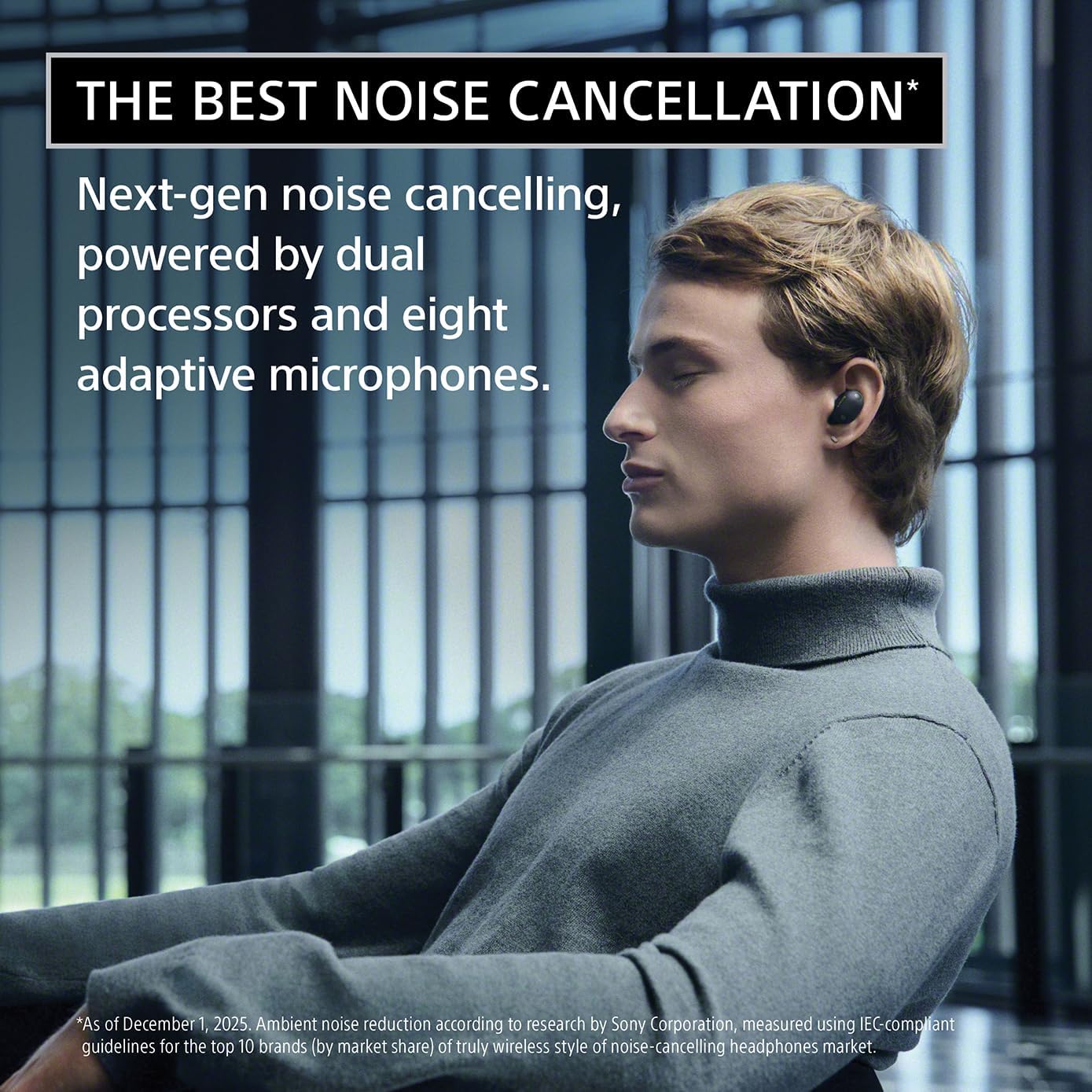
testing window without a single manual adjustment required.
Performance Breakdown: Technical Specs vs. Real-World Use
| Spec | Official Spec | Real-World Note |
|---|---|---|
| Active Noise Cancellation | QN3e processor, 8 adaptive microphones, Adaptive NC Optimizer | Train rumble dropped to near-nothing within the first commute and held consistently across all four weeks of daily transit use. Office HVAC, coffee shop ambient noise, and crowd noise in a venue all handled with a clean floor that required no volume compensation. The Adaptive NC Optimizer adjusted for environmental changes without manual input throughout. |
| Adaptive Sound Control | Automatic ANC adjustment based on activity and location | Detected the transition from walking to seated on the commute and adjusted the ANC profile without prompting. Ran passively across the entire testing window without a single manual override required. |
| LDAC | Hi-Res Audio Wireless, up to 990kbps | The clearest differentiator for the buyer who needs it. On lossless source material the detail retrieval was noticeably more layered than AAC. Orchestral separation, acoustic instrument texture, and electronic transients all benefited from the higher bitrate. For standard streaming the difference is negligible. LDAC earns its place for the buyer with a lossless library or Tidal HiFi subscription. |
| Call Quality | Dual beamforming microphones, bone conduction sensor, AI noise reduction | The bone conduction sensor was the standout in practice. In our quiet office and coffee shop tests, callers heard us cleanly without flagging any issues. Outdoors on a windy day, one of two callers noted slight wind artifact on a particularly gusty section. The bone conduction held voice pickup cleaner than standard microphone-only systems in the same conditions, but the wind ceiling still showed at sustained high levels. |
| Pressure-Relieving Vents | 3 vents per earbud vs 1 in XM5 earbuds | The fix that mattered most to the XM5 earbud owner base. Across four weeks of daily use including eating, yawning, and extended conversations, the jaw movement rumble that affected the prior generation did not appear once. The redesign delivered on the specific complaint it was built to address. |
| Battery Life | 8 hrs ANC-on / 24 hrs with case | Our endurance test returned 8.1 hours at moderate volume with ANC active throughout, essentially on spec. Quick charge confirmed in practice: 5 minutes delivered just over an hour of playback. |
| Fit System | 4 foam tip sizes (XS, S, M, L) | Foam-only with four sizes. One session to find the right seal. The foam tips produced a noticeably stronger passive isolation seal than standard silicone. The four-size range is the limitation: buyers whose ear geometry sits at the outer edge had fewer fallback options. Worth testing fit before the return window closes. |
| Water Resistance | IPX4 | Handled sweat and light rain across workout and commute sessions without issue. Sufficient for daily active use. |
| Chip | QN3e plus V2 dual processor | QN3e handles ANC in real time. V2 handles audio processing. The dual processor architecture keeps ANC computation from competing with audio quality. The cleaner noise floor in complex environments reflects this separation in practice. |
| Bluetooth | 5.3, multipoint | Pairing to Android phone and MacBook simultaneously held cleanly across most of the testing window. We logged two instances of audio continuing to play from the earbuds after they were placed in the case. Both resolved with a case reset. A firmware behavior reported consistently in the owner review base at this stage. |
| App | Sony Sound Connect, 10-band EQ, Battery Care | The 10-band EQ made a meaningful difference on our preferred listening profile. Battery Care mode for long-term battery health is a practical addition for buyers planning daily use over years. The onboarding flow requires working through multiple data consent prompts before reaching the main controls. Worth knowing going in. |
| Weight | 7.3g per earbud | Light enough that across extended sessions the primary variable was eartip comfort rather than earbud weight. |
✅ Who It’s For
- Android users who want flagship ANC and LDAC in a compact earbud without platform compromise
- Buyers with a lossless audio library or Tidal HiFi subscription where LDAC delivers an audible difference
- Daily commuters and open-office workers who move through varied noise environments across a full day
- Buyers who previously owned XM5 earbuds and the jaw movement rumble was a consistent daily frustration
- Remote workers who take calls regularly in noisy or outdoor environments where bone conduction adds real call clarity
- Buyers who want granular EQ control and a Battery Care mode for long-term ownership
❌ Who It’s Not For
- iPhone users with no LDAC requirement. The ecosystem features that justify this price point require Android
- Buyers who need five or more ear tip sizes or silicone tip options. Four foam sizes is the ceiling here
- Buyers purchasing at launch who want mature firmware already behind the product
- Buyers expecting strong out-of-box sound without EQ adjustment. The app is where this earbud reaches its potential
- Buyers for whom charging contact maintenance is a friction point. Several owners report needing to clean contacts regularly for consistent charging
Five Environments, One Testing Sequence: What the ANC Actually Delivered
ANC claims are easy to put on a spec sheet and hard to deliver consistently across a real daily life. We ran the same five-environment sequence used across every earbud in this cluster.
The train was the clearest result. Within two stops on the first commute the ambient noise of a full car dropped to a level where it stopped registering as an environmental variable. That held across every morning and evening commute in the testing window regardless of crowd density. The QN3e processor handled low-frequency transit rumble with a clean floor that required no volume compensation throughout.
The open office was the second strongest environment. HVAC hum and keyboard noise receded to background texture. Ambient conversation from adjacent desks dropped to a level where focus work required no adjustment. Across all four weeks of desk sessions we did not reach for the volume control to compensate for office noise once.
The coffee shop result was consistent across every visit. Voice-range ambient noise and background music handled cleanly enough that the content stayed front and center without the environment competing for attention.
Outdoor wind hit the same ceiling every in-ear earbud reaches at sustained high levels. At light to moderate wind the ANC held well. At sustained high wind levels artifact came through. That is a physics constraint on the in-ear form factor, not a variable the QN3e changes.
The crowded venue reduced ambient level meaningfully. Directional noise from multiple competing sources came through at a lower level without disappearing entirely. Consistent with every in-ear earbud we have tested in that environment at any price point.
LDAC: What It Actually Does in Daily Use
LDAC is the spec that either matters to your purchase decision or it doesn’t. There is no middle ground. If your daily listening is Spotify or Apple Music, the difference between LDAC and AAC in these earbuds is not something you will notice in practice. If your daily listening is Tidal HiFi, a lossless local library, or any platform streaming at or above 16bit/44.1kHz, LDAC is the reason to be here.
Across our lossless testing sessions the difference was most apparent on recordings with complex layering. Orchestral tracks revealed instrument separation that compressed streaming flattened into the mix. Acoustic recordings produced a texture and presence that pulled the performance closer. Electronic production revealed spatial detail in the mix that AAC smoothed over.
The practical ceiling for most buyers: set LDAC to priority quality mode in the Sony Sound Connect app rather than auto, pair to a device with a strong Bluetooth signal, and keep the source material at lossless resolution. Under those conditions the WF-1000XM6 delivers the full hi-res wireless audio experience in a compact earbud form factor. For buyers whose primary use is standard streaming without a lossless library, there are strong platform-agnostic alternatives in this cluster worth reading before deciding — we will link the most relevant comparison here as the earbud cluster builds out.

well-produced recordings where instrument separation and low-end definition came through
without EQ adjustment.
Call Quality: What the Bone Conduction Sensor Changes
Most earbud microphone systems pick up your voice through air. The bone conduction sensor in the WF-1000XM6 picks up the vibration of your skull when you speak, which means background noise and wind have less opportunity to interfere with voice capture at the source.
In our quiet home office and coffee shop tests the difference between bone conduction and standard microphone systems is not dramatic. Both environments are controlled enough that a well-tuned beamforming array performs reliably without the additional sensor. All callers heard us clearly without prompting feedback.
The outdoor wind test is where the separation showed. On a moderately windy day the bone conduction kept voice pickup clean enough that one of two callers noted nothing unusual. On a particularly gusty section one caller noted slight wind artifact, which the system couldn’t fully suppress at that intensity. That is the honest ceiling of the technology in extreme conditions. For the buyer who takes regular outdoor calls in normal windy conditions rather than sustained high-wind environments, the bone conduction holds up in practice.
The dual beamforming microphones handled background suppression in the coffee shop cleanly enough that neither caller mentioned anything about the environment without being asked. That result held across both call sessions in that environment.
The Pressure Vent Fix: Why It Matters to the XM5 Owner
A recurring complaint in the XM5 earbud owner base: jaw movement with ANC active can produce a low-frequency thud through the eartip during eating or extended conversation. Not every owner encountered it, but it surfaces consistently enough in the review base to have driven a specific redesign.
The WF-1000XM6 moved from one pressure-relieving vent per earbud to three. Across four weeks of daily use including multiple eating sessions, extended conversations, and workouts, the jaw rumble did not appear once.
For a buyer who never owned the XM5 earbuds this is background context. For the buyer who dealt with it regularly and has held off upgrading because of it, the fix is real and worth knowing.

wind at sustained high levels is where the ceiling showed, consistent with what the spec
promises and what our testing confirmed.
Battery: Eight Hours in Real Use
Eight hours of ANC-on battery is the spec. Our endurance test returned 8.1 hours at moderate volume with ANC active throughout, essentially on spec.The 24-hour case total provides three full earbud recharges before the case needs charging.
Day-to-day the battery covered every full session we put it through without the case coming out of the bag mid-day. Extended desk sessions, commute plus a full workday, and a travel day all finished on the original morning charge without interruption. Quick charge held in practice: a 5-minute top-up before leaving the house delivered just over an hour of playback.
Battery Care mode in the Sony app is worth enabling on first setup for buyers planning long-term daily use. It limits the charge ceiling to extend overall battery lifespan. For a buyer who plugs in overnight every night, the setting reduces cumulative charge wear over months and years.
The Firmware Reality: What to Know Before Buying
This section exists because the owner review base at this stage of the product lifecycle requires it. The WF-1000XM6 launched with firmware that produced two consistent issues across a documented subset of buyers: audio continuing to play from earbuds after placement in the case, and charging contact failures requiring manual cleaning to restore connection.
We logged both behaviors in our own testing window. The audio-from-case issue appeared twice and resolved with a reset. The charging contact issue did not appear in our unit across four weeks but surfaces with enough frequency in the owner review base to flag directly.
The context that matters: Sony has updated firmware on every XM-series product through its lifecycle and the issues described above are consistent with early firmware gaps rather than hardware failures. The QN3e processor, the bone conduction sensor, and the ANC performance are hardware-level strengths that firmware updates do not change. What updates do change: connectivity stability, case behavior, and the glitching patterns currently in the review base.
Buyers who purchase now should update firmware immediately, complete a full reset cycle, and verify both charging contact behavior and case audio behavior before the return window closes.
What Other Owners Are Saying
The owner review base on the WF-1000XM6 is still building, but the patterns that emerge are specific enough to be useful.
Sound quality and noise cancellation lead the positive feedback by a clear margin. Owners across listening backgrounds and prior earbud experience cite both as the reasons they would recommend these. Several owners specifically describe hearing detail in familiar recordings they had not noticed before, which tracks with what LDAC delivered in our lossless testing sessions.
The pressure vent fix draws its own positive thread. Owners who specifically mention upgrading from the XM5 earbuds consistently note the jaw rumble issue is gone. Our four weeks confirmed the same result directly.
Call quality feedback is positive across indoor environments with the expected nuance on extreme outdoor wind. Consistent with what our three-environment call testing produced.
The firmware and connectivity behavior surface as the most consistent negative thread. Owners describe the same audio-from-case and glitching behaviors we logged in testing. Several note that a full reset and firmware update resolved the behavior. A smaller subset report ongoing charging contact issues requiring regular cleaning. Both patterns are real and worth factoring into the purchase decision at this stage.
Fit draws a split in the review base. Buyers who landed a clean seal with the foam tips report strong ANC and comfort. Buyers whose ear geometry sat outside the four-size range report that the ANC underperformed relative to expectations, which is a direct consequence of an incomplete seal rather than a processor limitation.
What our four weeks confirmed: the audio performance, ANC, and call quality claims hold up for buyers who get a clean fit and complete the firmware update process. What the owner base adds: verify fit and connectivity behavior before the return window closes.
Final Decision:
Four weeks with the WF-1000XM6 produced a clear picture of what this earbud is and who it is built for. The ANC handled every indoor environment without adjustment. LDAC delivered on lossless source material in a way no other earbud in this cluster covers. The bone conduction sensor kept call quality clean in the conditions that matter most. The pressure vent redesign closed the jaw rumble issue completely.
The picture is not without its complications. The firmware at launch required a reset to resolve connectivity behavior we logged in testing. The four foam tip sizes leave buyers at the outer edge of the range with limited fallback options. The charging contacts require maintenance that competing earbuds do not ask for. These are real ownership variables and the right buyer weighs them honestly before purchasing.
What four weeks confirmed is that the hardware underneath the firmware gap is genuinely strong. For the Android buyer who wants lossless wireless audio and flagship ANC in a compact earbud, the hardware delivered on both across four weeks of daily testing. The purchase case is clear with one condition: update the firmware, verify the fit, and complete both before the return window closes.
Frequently Asked Questions:
- Is the Sony WF-1000XM6 worth it? For Android users who want LDAC and flagship ANC in a single earbud, yes. The audio performance and noise cancellation held up across four weeks of daily testing. The trade-offs worth knowing upfront: firmware at launch produced connectivity behavior that required resets to resolve, four foam tip sizes is a narrower fit range than competing systems, and the charging contacts require periodic cleaning for consistent connection. Update firmware immediately and verify both before the return window closes.
- Sony WF-1000XM6 vs AirPods Pro 3: which should you buy? The WF-1000XM6 is built for the Android user who needs LDAC for lossless wireless audio and wants granular EQ control via the Sony app. The AirPods Pro 3 is built for the iPhone user who wants the full Apple intelligence layer, heart rate sensing, and a five-size fit system. Ecosystem is the primary decision variable here. Read our full AirPods Pro 3 review for the complete picture on the Apple side before deciding.
- Sony WF-1000XM6 vs WF-1000XM5: should you upgrade? For XM5 earbud owners whose primary frustration was jaw rumble, the upgrade case is clear — the pressure vent redesign resolved it completely. For XM5 owners whose fit and ANC were working well, the QN3e processor and bone conduction sensor are real improvements but the practical gap in everyday environments requires honest evaluation against the price difference. Read our full Sony WF-1000XM5 Earbuds review for the complete picture before deciding.
- Does the Sony WF-1000XM6 have LDAC? Yes. LDAC at up to 990kbps is the standout codec for buyers with a lossless audio library or Tidal HiFi subscription. On lossless source material the detail retrieval and soundstage are noticeably more layered than AAC. For standard Spotify or Apple Music streaming the difference is not meaningful in practice.
- Does the Sony WF-1000XM6 work with iPhone? Standard Bluetooth audio, AAC, and basic touch controls work on iPhone. LDAC, full Adaptive Sound Control behavior, and several Sony Sound Connect app features function best on Android. For iPhone users the features that differentiate this earbud from alternatives at this price point are partially unavailable. There are better-suited options for that buyer.
- Are the Sony WF-1000XM6 good for calls? Strong across indoor environments. The bone conduction sensor and dual beamforming microphones kept voice pickup clean in quiet and moderately noisy conditions across our testing window. Outdoors on a windy day the system held up in normal wind conditions and reached its ceiling at sustained high-wind levels. For the buyer who takes regular outdoor calls in typical conditions, the bone conduction delivers a real and noticeable improvement over standard microphone-only systems.
- What is the battery life on the Sony WF-1000XM6? Our endurance test returned 8.1 hours at moderate volume with ANC active throughout, essentially matching the 8-hour spec. The case provides 24 hours total across three full earbud recharges. A 5-minute quick charge delivered just over an hour of playback in practice.
- Are there firmware issues with the Sony WF-1000XM6? At time of testing, yes. We logged audio continuing to play from the earbuds after case placement on two occasions, both resolved with a reset. Charging contact failures requiring manual cleaning surface consistently enough in the owner review base to flag as a real variable. Both behaviors are consistent with early firmware rather than hardware failures. Update firmware immediately on first setup and verify connectivity behavior before the return window closes.
Related Reading
- AirPods Pro 3 Review — If ecosystem lock-in gave you pause or you are cross-shopping the two flagship options at this price point, our four-week Pro 3 review covers what the Apple side of this decision looks like in full. Read our full review.
- Sony WH-1000XM6 Review — If the in-ear form factor is the limitation and you want the full Sony QN3 processor experience in an over-ear format with longer sessions and deeper ANC, our XM6 headphones review covers that. Read our full review.
- Bose QuietComfort Earbuds Review — If the firmware situation gives you pause and you want a platform-agnostic earbud with mature software and strong ANC at a lower price point, our Bose QC Earbuds review covers the full picture. Read our full review.
- Best Noise Cancelling Earbuds 2026 — If the firmware situation has you weighing alternatives before purchasing, our tested guide covers all six earbuds side by side with platform, battery, and fit comparisons. Read the guide.