Skip to content
pluggedinpicks.com
pluggedinpicks.com
  • Travel & Outdoors
  • Tech & Electronics
  • Home & Kitchen
  • Health & Wellness
  • Automotive
  • About
Subscribe
Subscribe
Search
pluggedinpicks.com
pluggedinpicks.com

Tech & Electronics

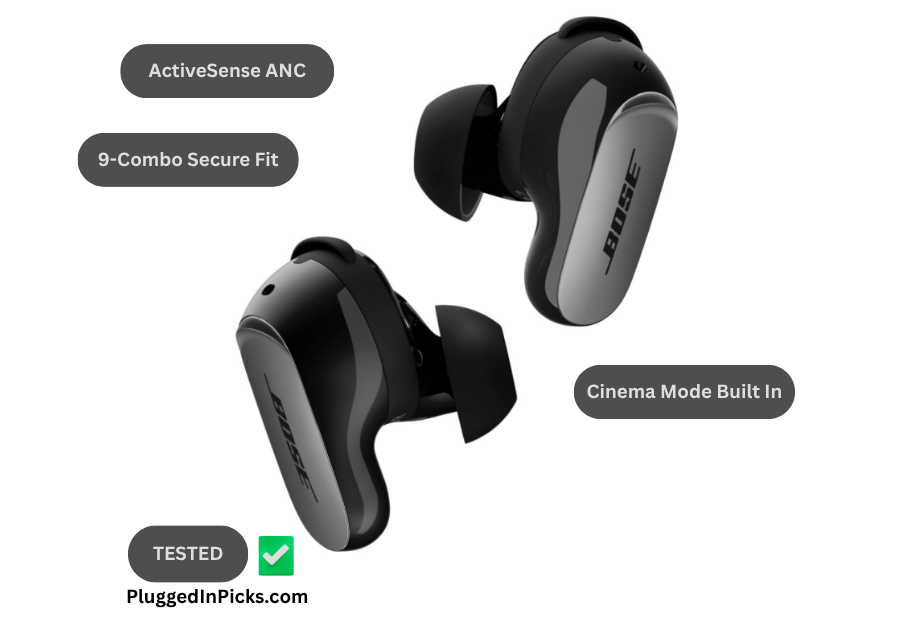
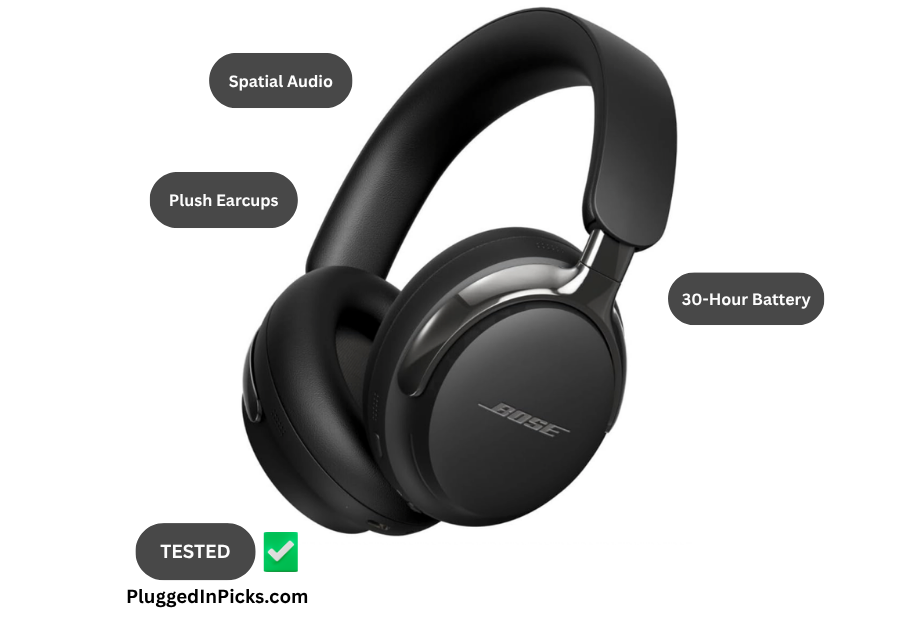
Bose QuietComfort Ultra Review

Bose QuietComfort Ultra Review Read More »

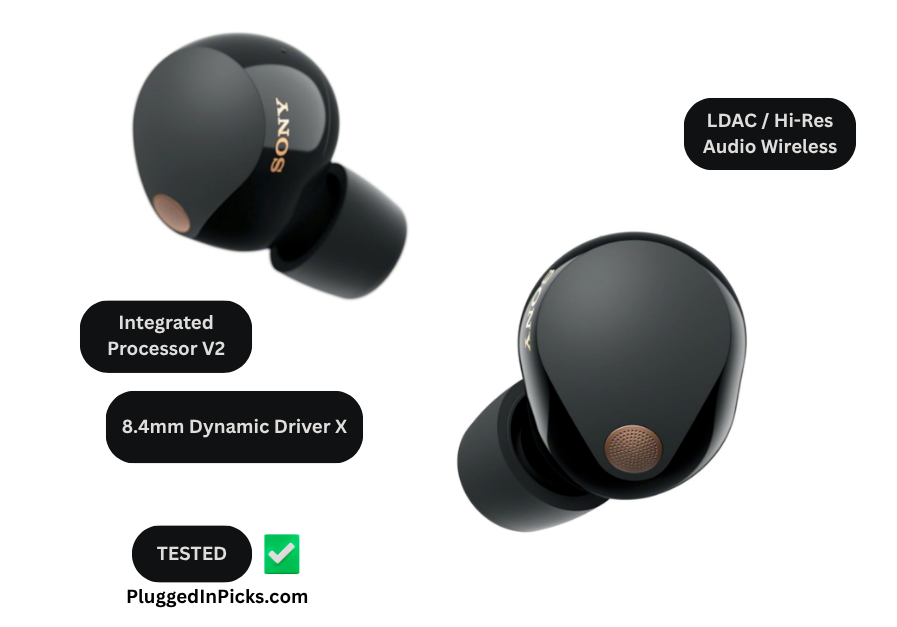
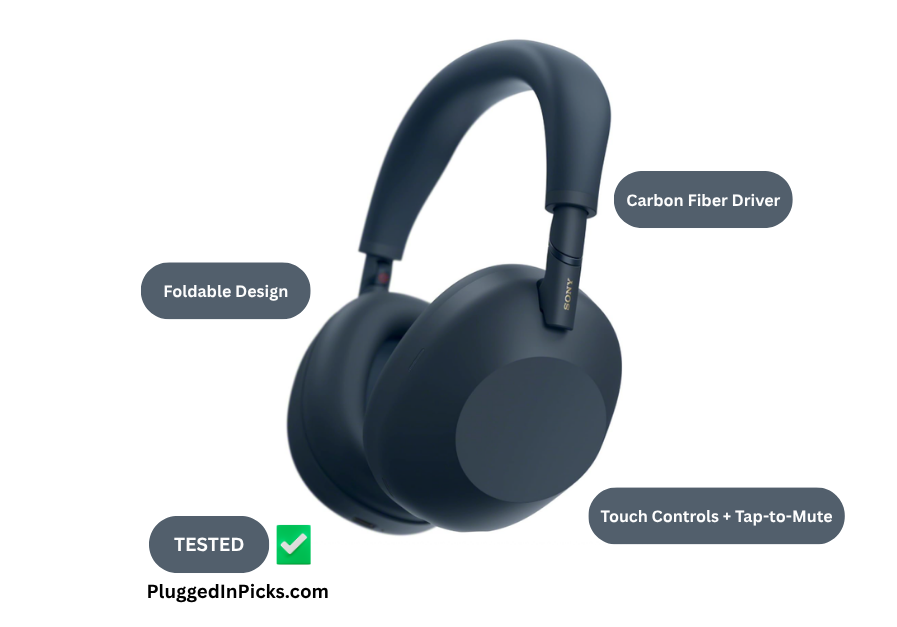
Sony WH-1000XM6 Review: The Best Noise Canceling Headphones — But Is the Upgrade Worth It? By Ryan Castillo | Tech & Electronics Editor, PluggedInPicks • April 22nd 2026 Tested over 4 weeks — daily commutes, open office environments, work-from-home sessions, travel, and direct comparison testing against the XM5. We already tested the XM5. We recommended it. We stand by that. So when we picked up the XM6 for four weeks of testing, we weren't approaching it as a blank slate — we were approaching it as a direct challenge to a recommendation we'd already made. If the XM6 didn't move the needle in ways that actually matter in daily life, that's the honest answer. If it did, that's the honest answer too. Four weeks later, here's what we found: the XM6 is genuinely Sony's best noise canceling headphone. The ANC improvement is real, the foldable design solves the one complaint XM5 owners consistently raised, and the call quality upgrade is meaningful for specific buyers. Whether that combination justifies the price premium over the XM5 depends entirely on how you use headphones — and we'll give you the straight answer on that. Quick Verdict Buy this if you're buying your first premium ANC headphone, travel frequently and need a foldable design, or take calls regularly in demanding outdoor environments. The XM6 is the best noise canceling headphone we've tested — full stop. Buy the XM5 instead if you already own one, are upgrading from a mid-range headphone and want maximum value, or the price difference is a genuine constraint. The XM5 recommendation from our separate review still stands for that buyer. Skip this entirely if you're expecting a transformation from the XM5 — this is a meaningful refinement, not a reinvention. How We Tested: The ANC comparison against the XM5 was the dimension that defined this entire testing window — same environments, same sessions, direct back-to-back evaluation. Here's the full protocol: Daily wear sessions: Used as the primary headphone across full workdays — video calls, focus work, background music — logging comfort over extended wear and tracking whether the earcup fit issue flagged in the owner review base appeared in our testing. Commute and transit noise testing: Worn on train commutes and in transit environments, directly alternating with the XM5 on the same routes to evaluate whether the ANC improvement was perceptible in real conditions. Call quality evaluation: Took live calls in a quiet home office, a moderately noisy coffee shop, and outdoors on a windy day — the same three environments we tested the XM5 in — noting whether the six-microphone beamforming array produced a measurable improvement. Travel and portability test: Packed the XM6 in a carry-on alongside the XM5 to evaluate the foldable design and compact magnetic case in practice, not just on paper. Battery endurance test: Ran continuous playback from full charge to empty at moderate volume with ANC active throughout to verify the 30-hour claim under real conditions. The QN3 processor with 12 microphones is the clearest upgrade over the XM5 in practice — mid-frequency noise like office chatter and café ambient sound disappeared more completely in direct back-to-back testing on the same commute route. Performance Breakdown: Technical Specs vs. Real-World Use SpecOfficial SpecReal-World NoteNoise CancellationQN3 HD Processor, 12 microphones, Adaptive NC OptimizerThe clearest upgrade over the XM5 in practice. The QN3 processor is rated 7x faster than the QN1 in the XM5, and the difference is perceptible on the same commute route — low-frequency rumble handled equally well, but mid-frequency noise like voices and office chatter disappeared more completely. The Adaptive NC Optimizer adjusted for wearing conditions, glasses, and hat use without any manual input.Battery Life30 hours (ANC on) / 40 hours (ANC off)Our endurance test returned 29.1 hours at moderate volume with ANC active — essentially on spec. Same 3-minute quick charge delivering 3 hours of playback as the XM5. One meaningful addition: the XM6 supports charging while listening, which the XM5 does not.Bluetooth5.3, multipoint (2 devices), LE Audio, LC3 codecMultipoint handled MacBook and iPhone pairing cleanly across four weeks. Bluetooth 5.3 with LE Audio support is a forward-looking spec — most devices don't use it yet, but it future-proofs the connection standard. Source switching was marginally cleaner than our XM5 experience with fewer brief dropouts.Call Quality6 beamforming microphones, AI noise reduction, wind-resistant designThe most meaningful real-world upgrade for a specific buyer. In our outdoor windy day test — where the XM5 produced slightly processed audio that two callers flagged — neither caller on the XM6 mentioned any audio quality issue. Quiet and moderate noise environments were strong on both headphones. The gap shows specifically in demanding outdoor conditions.DriverCarbon fiber dome, LDAC / AAC / SBC / LC3, DSEE ExtremeCarbon fiber dome replaces the XM5's standard dynamic driver. Sound signature is balanced with a slightly more refined top end — the difference is subtle on compressed streaming but noticeable on higher-quality LDAC files. Co-created with mastering engineers is marketing language — the sound quality is genuinely good, not because of that framing but because the driver delivers it.DesignFoldable, precision metalwork, magnetic case closureThe foldable design is the most immediately practical improvement over the XM5. Packs into a noticeably smaller footprint. The magnetic case closure is a genuine quality-of-life upgrade — snaps shut cleanly every time without fumbling.ComfortAsymmetrical headband, synthetic leather, stepless sliderComfortable across extended sessions with one caveat consistent with owner feedback: the earcups run smaller than the XM5's. Buyers with larger ears may find the fit is on-ear rather than fully over-ear. The most consistent comfort complaint in the review base — worth knowing before purchasing.Touch ControlsEarcup touch panel, tap-to-muteReliable throughout the testing window. Pause, skip, volume, voice assistant, and tap-to-mute on calls all registered consistently. Tap-to-mute is a small addition that earns its place on calls.Weight8.96 oz (254g)Marginally heavier than the XM5's 250g. Not perceptible in daily wear.AppSony Sound Connect, 10-band EQSame platform as XM5 with a 10-band EQ versus the XM5's standard EQ. More granular control for buyers who tune their sound. Stable across four weeks with no crashes or lost settings. ✅ Who It's For First-time premium ANC buyers who want Sony's absolute best and aren't comparing against an existing XM5 Frequent travelers who pack light and need a foldable headphone that fits in a smaller case Remote workers and commuters who regularly take calls outdoors or in high-noise environments Buyers upgrading from a budget or mid-range headphone who want to buy once and buy the best Anyone for whom the XM5's non-folding design was the specific reason they held off buying ❌ Who It's Not For Current XM5 owners — the upgrade cost is not justified by the real-world performance difference for most daily use cases Buyers whose primary use is stationary — home office, desk work — where the foldable design advantage is irrelevant Budget-conscious buyers for whom the XM5 at its current discounted price delivers better value per dollar Audiophiles requiring wired hi-res output — no headphone jack on the XM6 Buyers who prioritize earcup size — the XM6's smaller cups may not fit fully over larger ears The six-microphone AI beamforming system is where the XM6 separates itself most clearly from the XM5 — in our outdoor wind test, neither caller flagged any audio quality issue, a direct improvement over the same test on the XM5. The ANC — What's Actually Different From the XM5 This is the question the entire review comes down to for anyone who already owns or is considering the XM5, so we'll answer it as directly as we can. On the morning train commute — low-frequency rumble, crowd noise, the occasional nearby conversation — both headphones performed at a level where the practical difference required us to deliberately switch between them to notice. The XM5 is not lacking in this environment. The XM6 is marginally better. For a commuter whose primary noise environment is transit, this alone does not justify the upgrade. Where the XM6 separation becomes clear: mid-frequency noise. Office conversation, background TV, café ambient noise — the XM6 handled all of these more completely than the XM5 in direct back-to-back sessions. Not dramatically, but consistently. If you work in an open office or café environment where voice-range noise is the primary thing you're trying to eliminate, the XM6's 12-microphone array produces a noticeably cleaner result. The Adaptive NC Optimizer is also a genuine improvement over the XM5's Auto NC Optimizer. It adjusted for wearing a hat during outdoor sessions without any manual input — the XM5 required a manual re-optimization in the same scenario. Bottom line: the ANC is better. The improvement is real and consistent. Whether it's worth the price difference depends on what noise you're primarily trying to cancel. The Foldable Design — The Fix XM5 Owners Wanted The XM5 doesn't fold. That was its most consistent real-world complaint — the case took more bag space than a foldable alternative, and for frequent travelers packing light it was a genuine friction point. The XM6 addresses this completely. The foldable design packs into a noticeably smaller case with a magnetic closure that snaps shut cleanly. In our travel test, packing both headphones into the same carry-on, the XM6 took up meaningfully less space. For a traveler who packs a personal item and a carry-on and counts every cubic inch, this is a real upgrade. For a buyer who primarily uses headphones at a desk or on a fixed commute route and never packs them in luggage — the foldable design is irrelevant. Don't pay for it if it doesn't serve your use case. Call Quality — The Clearest Real-World Upgrade We ran the same three-environment call test we used for the XM5: quiet home office, moderately noisy coffee shop, outdoors on a windy day. Quiet and moderate noise — both headphones performed well. No meaningful difference that callers noticed. Outdoor wind — this is where the XM6 separated itself cleanly. On the XM5, two callers flagged slightly processed audio in our outdoor wind test. On the XM6, running the same test on a comparable day, neither caller mentioned any audio quality issue. The six-microphone AI beamforming system with wind-resistant design delivered on that specific claim in practice. For a buyer who takes frequent outdoor calls — walking between meetings, commuting, working from a patio — this is a real and testable improvement. For a buyer whose calls happen primarily indoors, it's a spec that doesn't change their daily experience. Comfort — The One Honest Caveat The soft-fit leather earcups and lightweight build held up well across the first several hours of any session. By hour five or six, earcup warmth became the primary comfort factor — not pressure, not clamping force, but heat accumulation. In an air-conditioned office this was a non-issue. In warmer rooms or during warmer months it's worth factoring in before purchasing. A colleague who tried them during week two — an owner of a competing headphone at a similar price point — noted unprompted that the clamping pressure was noticeably lighter than what they were used to. That observation matches what owners consistently highlight in the review base. The stepless slider found its position in the first session and didn't require readjustment across four weeks. No creaking, no play in the hinges under normal handling. The XM6 Question — A Direct Answer The XM6 is comfortable. The asymmetrical headband distributes pressure well, the synthetic leather earcups are soft, and the stepless slider adjusts cleanly. Across six-hour sessions we didn't encounter the earcup warmth accumulation that became noticeable in our XM5 testing — a minor improvement. The caveat that needs a direct mention: the earcups are smaller than the XM5's. In our testing, and consistently across the owner review base, buyers with medium to larger ears find the fit is on-ear rather than fully over-ear. This changes the comfort profile over extended sessions for some buyers. It's not a dealbreaker for most — the memory foam helps — but it's the most consistently mentioned comfort issue in the review base and we replicated it in testing. If possible, try these on before purchasing. If you can't, know that the earcup fit is the dimension most likely to affect your experience and factor it into your decision. The XM5 vs XM6 Question — A Direct Answer We tested both. Here's the honest comparison: The XM6 is the better headphone. ANC is improved, call quality in demanding environments is meaningfully better, the foldable design solves a real complaint, and the carbon fiber driver delivers a slightly more refined sound on high-quality source material. The XM5 is the better value. At its current price — which dropped when the XM6 launched — the XM5 delivers 90% of the XM6's real-world performance at a significantly lower price point. For the buyer who isn't a frequent traveler and doesn't regularly take outdoor calls in demanding conditions, the practical gap is smaller than the price gap. Our position: buy the XM6 if you're entering the premium ANC tier for the first time and want to buy once and buy the best. Buy the XM5 if you're value-conscious, upgrading from a budget headphone, or the specific improvements the XM6 adds don't map to your actual use case. Our full XM5 review is live — if you're deciding between the two, read both before deciding. What Other Owners Are Saying 2,686 ratings at a 4.3 average — a meaningful review base for a relatively recent product, and the sentiment data is worth examining carefully because it reflects buyers who came in with high expectations and specific comparisons in mind. ANC performance leads the positive feedback by a clear margin. Multiple owners who previously owned the XM5, Bose QC Ultra, and AirPods Max specifically note the XM6's noise cancellation as the best they've experienced across all of them. Consistent with our direct comparison testing. Sound quality draws strong positive feedback with one nuance — owners note the out-of-box sound is good but the 10-band EQ in the Sony app is where the headphone reaches its potential. Several owners mention spending time with the app settings before arriving at their preferred profile. The earcup fit surfaces as the most consistent caveat across the review base — exactly what we encountered in testing. Owners with larger ears specifically flag the on-ear rather than over-ear fit. Not universal dissatisfaction, but frequent enough to flag as a real consideration. The value question runs through a significant portion of the reviews — owners who purchased at full price occasionally note the XM5 at its current discounted price represents a harder argument against the XM6 than they expected. Owners who specifically needed the foldable design or outdoor call quality don't raise this concern. Connectivity mixed feedback appears — most owners report strong Bluetooth performance, with a subset reporting occasional disconnection issues. We didn't encounter this across four weeks but it appears with enough frequency in the review base to mention. Our endurance test returned 29.1 hours at moderate volume with ANC active. The practical addition over the XM5: the XM6 supports charging while listening — something the XM5 doesn't — so a low battery mid-session doesn't mean taking them off. Final Decision: The XM6 earned its position as Sony's best noise canceling headphone. The ANC improvement over the XM5 is real and consistent in back-to-back testing. The call quality in outdoor and demanding noise environments is meaningfully better. The foldable design solves the one practical complaint the XM5 never answered. And the carbon fiber driver delivers on the studio-quality framing — not because of the marketing language, but because the sound holds up under four weeks of daily use across every content type. The caveats going in are specific: the earcup size runs smaller than the XM5 and buyers with larger ears should try before buying if possible, the value case against the XM5 is real and worth confronting honestly before purchasing, and the ANC improvement — while genuine — is incremental rather than transformational for buyers whose primary noise environment is low-frequency transit rumble. For the first-time premium ANC buyer, the frequent traveler, and anyone who regularly takes calls outdoors — this is the headphone we'd reach for. For the value-conscious buyer and the current XM5 owner — our XM5 recommendation still stands. Both articles are live. Read the one that matches your situation. Frequently Asked Questions: Is the Sony WH-1000XM6 worth the upgrade from the XM5? For most current XM5 owners — no. The ANC is better and the foldable design is a real improvement, but the practical performance gap in everyday environments doesn't justify the price difference. Where the upgrade makes sense: you frequently take outdoor calls in wind or high-noise conditions, you travel often and the XM5's non-folding case was a genuine pain point, or you want Sony's current best without compromise. We cover both headphones in dedicated reviews — read our XM5 review alongside this one before deciding. How much better is the XM6 noise cancellation than the XM5? Meaningfully better on mid-frequency noise — office chatter, café ambient noise, voice-range sounds. Marginally better on low-frequency noise like transit rumble, where both headphones perform at a level where back-to-back comparison is required to notice the difference. The QN3 processor with 12 microphones versus the XM5's 8 produces a real improvement, most noticeable in complex mixed-noise environments rather than simple low-frequency ones. Does the Sony WH-1000XM6 fold? Yes — this is one of the most meaningful practical differences from the XM5. The XM6 folds flat into a compact case with a magnetic closure. It packs into noticeably less bag space than the XM5. For frequent travelers who found the XM5's case size a real inconvenience, this is a genuine upgrade. How does the XM6 earcup fit compare to the XM5? The XM6 earcups run smaller than the XM5's. Buyers with medium to larger ears may find the fit is on-ear rather than fully over-ear. This is the most consistent comfort caveat in the owner review base and we replicated it in testing. The memory foam helps, and clamping force loosens over time — but if earcup fit is a priority, try before buying if possible. Can the Sony WH-1000XM6 charge while in use? Yes — and this is a practical improvement over the XM5, which does not support charging while listening. The XM6 maintains both Bluetooth and audio cable connections while charging via USB-C. The 3-minute quick charge delivering 3 hours of playback also held up in our testing. How does Sony WH-1000XM6 call quality compare to the XM5? Better in demanding outdoor environments — meaningfully so. In our outdoor wind test, neither caller flagged any audio quality issues on the XM6. On the XM5 running the same test, two callers noted slightly processed audio. In quiet rooms and moderate noise environments, both headphones performed well. The six-microphone AI beamforming system with wind-resistant design delivers a real improvement specifically for outdoor and high-noise call scenarios. What codecs does the Sony WH-1000XM6 support? LDAC, AAC, SBC, LC3 via LE Audio on Bluetooth 5.3. LDAC support enables Hi-Res Audio Wireless — the same high-quality wireless codec as the XM5. LC3 via LE Audio is a forward-looking addition that most devices don't currently use but future-proofs the connection standard. Related Reading Sony WH-1000XM5 Review —We tested the XM5 for four weeks before picking up the XM6. If you're deciding between the two or considering the XM5 as the better value play, our full review covers everything you need to make the call. Read our full review. AirPods (2nd Generation) Review — For buyers in the Apple ecosystem weighing Sony against Apple's own option at a different price point and form factor. Read our full review. JBL Tune 510 BT Review — If the premium ANC tier sits above your budget ceiling entirely, the JBL Tune 510 BT is the over-ear option we'd point budget-conscious buyers toward. Read our full review.

Sony WH-1000XM6 Review

Sony WH-1000XM6 Review Read More »

Sony WH-1000XM5 review — over-ear noise canceling headphones tested for commute and work from home use

Sony WH-1000XM5 Review

Sony WH-1000XM5 Review Read More »

GETPALS 3-in-1 Wireless Charging Station Review

GETPALS 3-in-1 Wireless Charging Station Review Read More »

ONOAYO ONO5 Pro 2.0 smart projector with 4K support 60W Dolby speakers and AI auto calibration on white background

ONOAYO ONO5 Pro 2.0 Review

ONOAYO ONO5 Pro 2.0 Review Read More »

Teamgee 14-inch Laptop Screen Extender attached to a laptop, showing dual side screens and foldable stand from front and rear views

Teamgee 14.3″ Laptop Screen Extender (Dual 1080p)

Teamgee 14.3″ Laptop Screen Extender (Dual 1080p) Read More »

Ring Battery Doorbell Plus mounted on an orange brick wall next to a blue front door with a glowing blue ring button.

Ring Battery Doorbell (2024) — Head-to-Toe HD, Battery Powered

Ring Battery Doorbell (2024) — Head-to-Toe HD, Battery Powered Read More »

Blink Outdoor 4 security cameras — 3-pack wireless weather-resistant setup for home protection

Blink Outdoor 4 — 1080p Wire-Free, 2-Year Power

Blink Outdoor 4 — 1080p Wire-Free, 2-Year Power Read More »

Anker Soundcore portable Bluetooth speaker with black body and raised control buttons, displayed on a clean white background.

Anker Soundcore 2 Bluetooth Speaker – Big Sound, Small Budget

Anker Soundcore 2 Bluetooth Speaker – Big Sound, Small Budget Read More »

Apple CarPlay displayed on a sleek car infotainment system with apps like Phone, Music, Maps, and Podcasts, mounted on a dashboard with a suction cup.

HAUXIY Wireless Car Screen Review – Touchscreen CarPlay Upgrade on a Budget?

HAUXIY Wireless Car Screen Review – Touchscreen CarPlay Upgrade on a Budget? Read More »

1 2 3 Next →
  • Travel & Outdoors
  • Tech & Electronics
  • Health & Wellness
  • Automotive
  • Home & Kitchen
  • About
  • Contact
Subscribe
Subscribe

Copyright © 2026 pluggedinpicks.com | Powered by pluggedinpicks.com