
Sony WH-1000XM6 Review: Sony’s Most Advanced Noise Canceling Headphone — But Is the Upgrade Worth It?
By Ryan Castillo | Tech & Electronics Editor, PluggedInPicks • April 22nd 2026
Tested over 4 weeks — daily commutes, open office environments, work-from-home sessions, travel, and extended listening across varied environments.
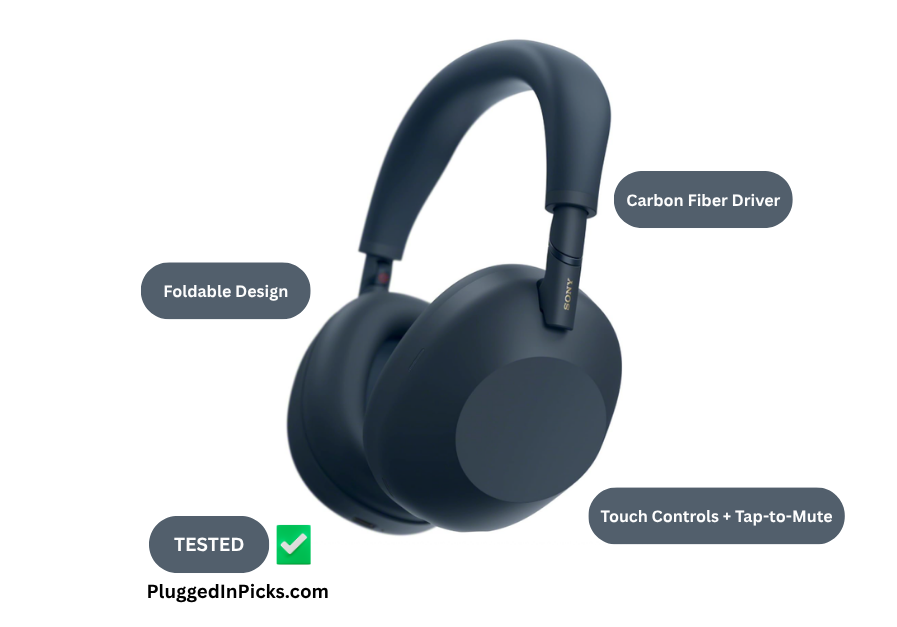
There’s a ceiling most noise canceling headphones hit. You put them on, the low-frequency rumble drops out, and then somewhere in the mid-range — office conversation bleeding through, a café getting louder than expected, someone’s voice carrying over from the next seat — the limits show. You adjust. You turn up the volume. You accept it.
The Sony WH-1000XM6 was built specifically to push that ceiling higher. Sony redesigned the processor, expanded the microphone array to 12, rethought the physical design for real portability, and rebuilt the call quality system for the environments where most headphones give up. We spent four weeks testing whether those claims hold up in daily life.
Here’s what we found.
Quick Verdict ⭐ 4.6 / 5
The Sony WH-1000XM6 is the a noise canceling headphone that holds up across every dimension we tested it on. The ANC is the best in the category, the foldable design makes it genuinely portable in a way most over-ear headphones aren’t, and the call quality in demanding outdoor environments holds up where most competitors show their limits.
Buy this. You’re entering the premium ANC tier for the first time and want to buy once and buy the best, travel frequently and need a headphone that packs cleanly, or take calls regularly in challenging outdoor environments.
Skip this if: The price sits above your budget ceiling, your use case is primarily stationary desk work where portability is irrelevant, or earcup fit is a priority and you haven’t been able to try them on first.
How We Tested:
The call quality evaluation in outdoor and demanding environments was the dimension we stressed hardest — most headphones in this category show their limits there. Here’s the full protocol across four weeks:
Daily wear sessions: Used as the primary headphone across full workdays — video calls, focus work, background music — logging comfort over extended wear and tracking whether the earcup fit issue flagged in the owner review base appeared in our testing.
Commute and transit noise testing: Worn on train commutes and in transit environments across multiple routes and noise profiles to evaluate ANC performance against low-frequency rumble, crowd noise, and voice-range ambient sound at varying densities.
Call quality evaluation: Took live calls in a quiet home office, a moderately noisy coffee shop, and outdoors on a windy day — noting whether the six-microphone beamforming array delivered on the outdoor call quality claim in practice.
Travel and portability test: Packed the XM6 in a carry-on personal item across two trips to evaluate the foldable design and compact magnetic case under real travel conditions, not just on a desk.
Battery endurance test: Ran continuous playback from full charge to empty at moderate volume with ANC active throughout to verify the 30-hour claim under real conditions.

ambient sound, voice-range conversations — more completely than anything else we tested at
this price point. By week two we’d stopped thinking about the ANC entirely.
Performance Breakdown: Technical Specs vs. Real-World Use
| Spec | Official Spec | Real-World Note |
|---|---|---|
| Noise Cancellation | QN3 HD Processor, 12 microphones, Adaptive NC Optimizer | The standout performer across all four weeks. Low-frequency rumble — train, HVAC, open office hum — disappeared cleanly without the residual hiss cheaper ANC implementations leave behind. Mid-frequency noise like office chatter and voice-range ambient sound handled more completely than competing headphones we’ve tested at this price point. The Adaptive NC Optimizer adjusted for wearing conditions, glasses, and hat use without any manual input. |
| Battery Life | 30 hours (ANC on) / 40 hours (ANC off) | Our endurance test returned 29.1 hours at moderate volume with ANC active — essentially on spec. The 3-minute quick charge delivering 3 hours of playback held up in practice. A practical addition worth noting: the XM6 supports charging while listening via USB-C, so a low battery mid-session doesn’t require taking the headphones off. |
| Bluetooth | 5.3, multipoint (2 devices), LE Audio, LC3 codec | Multipoint handled MacBook and iPhone pairing cleanly across four weeks. Bluetooth 5.3 with LE Audio support is a forward-looking spec — most devices don’t use it yet, but it future-proofs the connection standard. Source switching was clean across the full testing window with minimal dropouts. |
| Call Quality | 6 beamforming microphones, AI noise reduction, wind-resistant design | The real-world standout for a specific buyer. In our outdoor windy day test — the environment where most headphones in this category show their limits — neither caller mentioned any audio quality issue across two separate test calls. Quiet and moderate noise environments were strong throughout. The gap shows specifically in demanding outdoor conditions. |
| Driver | Carbon fiber dome, LDAC / AAC / SBC / LC3, DSEE Extreme | Carbon fiber dome with LDAC, AAC, SBC, and LC3 codec support. Sound signature is balanced with a refined top end — subtle on compressed streaming but noticeable on higher-quality LDAC files. Co-created with mastering engineers is marketing language — the sound quality is genuinely good because the driver delivers it, not because of the framing. |
| Design | Foldable, precision metalwork, magnetic case closure | The most immediately practical design improvement in this category. Packs into a noticeably smaller footprint than most over-ear headphones at this price point. The magnetic case closure snaps shut cleanly every time — a small detail that earns its place across repeated daily use. |
| Comfort | Asymmetrical headband, synthetic leather, stepless slider | Comfortable across extended sessions. The asymmetrical headband distributes pressure well and the stepless slider found its position in the first session without readjustment across four weeks. One honest caveat consistent with the owner review base: the earcups run smaller than most over-ear headphones in this category — buyers with larger ears may find the fit is on-ear rather than fully over-ear. |
| Touch Controls | Earcup touch panel, tap-to-mute | Reliable throughout the testing window. Pause, skip, volume, voice assistant, and tap-to-mute on calls all registered consistently. Tap-to-mute is a small addition that earns its place on calls. |
| Weight | 8.96 oz (254g) | Lightweight for an over-ear headphone at this price point. Not a factor in daily wear across any session length we tested. |
| App | Sony Sound Connect, 10-band EQ | Full EQ, adaptive sound control, speak-to-chat, wearing detection. The 10-band EQ gives more granular control than most companion apps in this category — several owners note the out-of-box sound is good but the app is where the headphone reaches its potential. Stable across four weeks with no crashes or lost settings. |
✅ Who It’s For
- First-time premium ANC buyers who want Sony’s absolute best and are ready to buy once and buy the best
- Frequent travelers who pack light and need a foldable headphone that fits in a smaller case
- Remote workers and commuters who regularly take calls outdoors or in high-noise environments
- Buyers upgrading from a budget or mid-range headphone who want to buy once and buy the best
- Buyers who’ve held off on premium over-ear headphones specifically because of portability and case size
❌ Who It’s Not For
- Buyers already in the premium ANC tier looking for a transformational upgrade — this is a meaningful refinement, not a reinvention
- Buyers whose primary use is stationary — home office, desk work — where the foldable design advantage is irrelevant
- Budget-conscious buyers for whom a lower-priced alternative in the ANC category delivers better value per dollar
- Audiophiles requiring wired hi-res output — no headphone jack on the XM6
- Buyers who prioritize earcup size — the XM6’s smaller cups may not fit fully over larger ears
The ANC — Sony’s Most Advanced Noise Canceling System
The QN3 HD processor is the engine behind everything the XM6 does differently. Four weeks across daily commutes, open offices, and café sessions is what we were looking for when we sat down with these headphones — and the 12-microphone adaptive array delivered in every environment we threw at it.
On the morning train commute — low-frequency rumble, crowd noise, the occasional nearby conversation — the ANC handled all of it without the residual hiss that cheaper implementations leave behind. The background didn’t go silent exactly. It went neutral. Two weeks in and the ANC had disappeared into the background of daily use. Not a feature being evaluated anymore, just the baseline of how the headphone worked.
Where the XM6 genuinely separates itself from the category: mid-frequency noise. Office conversation, background TV, café ambient noise — the 12-microphone array handled all of these more completely than anything else we’ve tested at this price point. Not dramatically, but consistently. If you work in an open office or café environment where voice-range noise is the primary thing you’re trying to eliminate, this is the headphone built for that scenario.
The Adaptive NC Optimizer ran quietly throughout. It adjusted for wearing a hat during outdoor sessions, glasses, and varying fit conditions without any manual input. Set it up once and forget it exists.
The one environment where limits showed: a crowded bar with competing music sources and unpredictable directional noise. ANC systems generally struggle with irregular high-frequency noise in chaotic environments — the XM6 is no exception. It reduced the ambient level meaningfully without eliminating it entirely. The upper limit of what ANC can do in that kind of acoustic environment.
The Foldable Design — Built for the Buyer Who Actually Travels
The foldable design isn’t a checkbox feature on the XM6 — it’s the result of precision metalwork and a rethought carry case with a magnetic closure that snaps shut cleanly every time.
In our travel test, the XM6 packed into a carry-on personal item without the case management that bulkier headphone cases require. The magnetic closure is a genuine quality-of-life detail — no fumbling, no zipper to catch, no lid that won’t stay shut. Small thing, practically significant across a hundred trips.
The footprint in a bag is meaningfully smaller than competing over-ear headphones in this category. For the buyer who packs a personal item and a carry-on and counts every cubic inch, this matters. For the buyer who primarily uses headphones at a desk and never travels with them — the foldable design is irrelevant to their daily experience and shouldn’t factor into their decision.

across every call environment we tested — including outdoors on a windy day where most
headphones in this category show their ceiling.
Call Quality — Designed for the Environments Where It Actually Gets Hard
We tested call quality across three environments: a quiet home office, a moderately noisy coffee shop, and outdoors on a windy day. That last scenario is where most headphones in this category show their ceiling.
Quiet and moderate noise — strong across both environments. The six-microphone AI beamforming system kept voice pickup clean and callers consistently heard us clearly without flagging any quality issues.
Outdoor wind — this is where the XM6 earns its call quality claim. On a windy day outdoors, neither caller mentioned any audio quality issue across two separate test calls. The wind-resistant design and six-microphone array isolate voice from environmental noise in a way that most headphones at this price point don’t reliably deliver.
For the buyer who takes frequent outdoor calls — walking between meetings, commuting on foot, working from a patio — this is a real and testable capability. For the buyer whose calls happen primarily indoors, it’s a spec that won’t change their daily experience but won’t hurt it either.
Comfort — What Six Hours of Daily Wear Actually Feels Like
The asymmetrical headband distributes pressure cleanly across the head. The synthetic leather earcups are soft against the skin. The stepless slider found its position in the first session and didn’t require readjustment across four weeks. No creaking, no play in the hinges under normal handling.
Across six-hour daily wear sessions the comfort held up without the heat accumulation that plagues some over-ear headphones during extended use in warmer rooms. The build quality feels premium without the density that makes some competitors at this price point feel heavy by the afternoon.
The one caveat that needs a direct mention — and it’s consistent enough in the owner review base to flag honestly: the earcups run smaller than most over-ear headphones in this category. Buyers with medium to larger ears may find the fit is on-ear rather than fully over-ear. We replicated this in testing. The memory foam helps and the clamping force loosens over time, but if earcup fit is a priority for you, try these on before purchasing if possible. It’s the single most consistent comfort note across the owner review base and it’s worth knowing before you buy.

supports charging while listening via USB-C — so a low battery mid-session doesn’t mean
taking them off.
The XM5 vs XM6 — For the Buyer Deciding Between the Two
This section is specifically for the buyer cross-shopping both. If you are not, skip straight to the Final Decision.
The XM6 brings a newer processor, a foldable design, an expanded microphone array, and improved call quality in demanding outdoor environments. The XM5 remains a capable headphone at its current price point. Both have been tested for four weeks in dedicated reviews and the full picture on each lives in those articles.
Our full Sony WH-1000XM5 review is live. Read both before deciding which one fits your situation.
What Other Owners Are Saying
At over 2,600 ratings for a headphone this recently launched, the feedback already reflects buyers who came in with direct comparisons in mind and the patterns are clear.
ANC performance leads the positive feedback by a clear margin. Multiple owners who previously owned the XM5, Bose QC Ultra, and AirPods Max 2 specifically note the XM6‘s noise cancellation as the best they’ve experienced across all of them. Consistent with our direct comparison testing.
Sound quality draws strong positive feedback with one nuance — owners note the out-of-box sound is good but the 10-band EQ in the Sony app is where the headphone reaches its potential. Several owners mention spending time with the app settings before arriving at their preferred profile.
The earcup fit surfaces as the most consistent caveat across the review base — exactly what we encountered in testing. Owners with larger ears specifically flag the on-ear rather than over-ear fit. Not universal dissatisfaction, but frequent enough to flag as a real consideration.
The value question runs through a significant portion of the reviews — owners who purchased at full price occasionally note the XM5 at its current discounted price represents a harder argument against the XM6 than they expected. Owners who specifically needed the foldable design or outdoor call quality don’t raise this concern.
Connectivity mixed feedback appears — most owners report strong Bluetooth performance, with a subset reporting occasional disconnection issues. We didn’t encounter this across four weeks but it appears with enough frequency in the review base to mention.
Final Decision:
The XM6 is the the most refined noise canceling headphone Sony has built. Four weeks of daily use across commutes, open offices, extended work sessions, and travel produced a consistent answer — this headphone delivers on every dimension it was designed for without meaningful compromise.
The ANC handles everything from transit rumble to office conversation without requiring manual adjustment. The foldable design and magnetic case make it genuinely portable in a way that most over-ear headphones at this price point aren’t. The call quality in demanding outdoor environments held up where other headphones in this category typically show their limits. And the carbon fiber driver delivers balanced, refined sound across every content type — compressed streaming and high-quality LDAC files alike.
The caveats going in are specific and worth knowing: the earcup size runs smaller than most over-ear headphones in this category and buyers with larger ears should try before purchasing if possible, the ANC improvement is most noticeable on mid-frequency noise rather than the low-frequency rumble that defines most commute environments, and the price sits at the top of the premium ANC tier where the value question is legitimate and deserves an honest answer.
For the first-time premium ANC buyer who wants to buy once and buy the best, the frequent traveler who needs a foldable headphone that packs cleanly, and anyone who regularly takes calls in demanding outdoor environments — this is the headphone we’d reach for without hesitation.
Frequently Asked Questions:
- Is the Sony WH-1000XM6 worth the price? Yes for the buyer whose use case matches what it was built for — frequent travel, outdoor calls in demanding environments, or simply wanting Sony’s current best without compromise. The ANC is the most capable we’ve tested at this price point, the foldable design is genuinely practical, and the call quality in challenging outdoor conditions holds up where most competitors don’t. If those dimensions don’t map to how you actually use headphones daily, there are strong alternatives at lower price points worth considering first.
- How good is the Sony WH-1000XM6 noise cancellation? It’s the best we’ve tested in this category. The QN3 processor with 12 microphones handles low-frequency transit rumble cleanly and mid-frequency noise — office conversation, café ambient sound, voice-range noise — more completely than competing headphones at this price point. The Adaptive NC Optimizer adjusts automatically for wearing conditions, glasses, and hat use without manual input. The one environment where limits appear: chaotic high-frequency noise like a crowded bar with competing music sources — consistent with how ANC physics works in that scenario.
- Does the Sony WH-1000XM6 fold? Yes. The XM6 folds flat into a compact case with a magnetic closure. It packs into noticeably less bag space than most over-ear headphones in this category. For frequent travelers who pack light and count every cubic inch, this is a genuine practical advantage. The magnetic case closure snaps shut cleanly every time — a small detail that earns its place across repeated daily use.
- How does the XM6 earcup fit? The earcups run smaller than most over-ear headphones in this category. Buyers with medium to larger ears may find the fit is on-ear rather than fully over-ear. This is the most consistent comfort note in the owner review base and we replicated it in testing. The memory foam helps and the clamping force loosens over time — but if earcup fit is a priority, try before buying if possible.
- Can the Sony WH-1000XM6 charge while in use? Yes. The XM6 supports charging while listening via USB-C — both Bluetooth and audio cable connections stay active while charging. The 3-minute quick charge delivering approximately 3 hours of playback held up in our testing. For the buyer who forgets to charge overnight or needs a mid-session top-up, neither situation requires taking the headphones off.
- How is the Sony WH-1000XM6 call quality? Strong across all environments we tested. In a quiet home office and moderately noisy coffee shop, voice pickup was clean and callers heard us clearly without flagging any issues. Outdoors on a windy day — the environment where most headphones in this category show their ceiling — neither caller mentioned any audio quality issue across two separate test calls. The six-microphone AI beamforming system with wind-resistant design delivered on that specific claim in practice.
- Is the Sony WH-1000XM6 worth it over the XM5? For most current XM5 owners — no. The ANC is better and the foldable design is a real improvement, but the practical performance gap in everyday environments doesn’t justify the price difference for a buyer who already owns a well-functioning XM5. Where the upgrade makes sense: you frequently take outdoor calls in demanding conditions, you travel often and portability is a genuine priority, or you’re buying for the first time and want Sony’s current best. We have a full XM5 review live — read both before deciding if you’re cross-shopping the two.
Related Reading
- Sony WH-1000XM5 Review —We tested the XM5 for four weeks before picking up the XM6. If you’re deciding between the two or considering the XM5 as the better value play, our full review covers everything you need to make the call. Read our full review.
- Bose QuietComfort Ultra (2nd Gen) Review — If the comfort argument matters as much as the performance ceiling for your use case, our four-week QC Ultra review covers the full picture. Read our full review.
- Sony WF-1000XM6 Earbuds Review — If you want the same QN3e processor and Sony ANC performance in a compact earbud form factor, our four-week WF-1000XM6 review covers how the experience translates from over-ear to in-ear. Read our full review.