
Sony WH-1000XM5 Review: Still the Smartest Buy in Noise Canceling Headphones
By Ryan Castillo | Tech & Electronics Editor, PluggedInPicks • April 21st 2026
Tested over 4 weeks — daily commutes, open office environments, work-from-home sessions, extended listening across multiple content types, and two-device workflow testing.
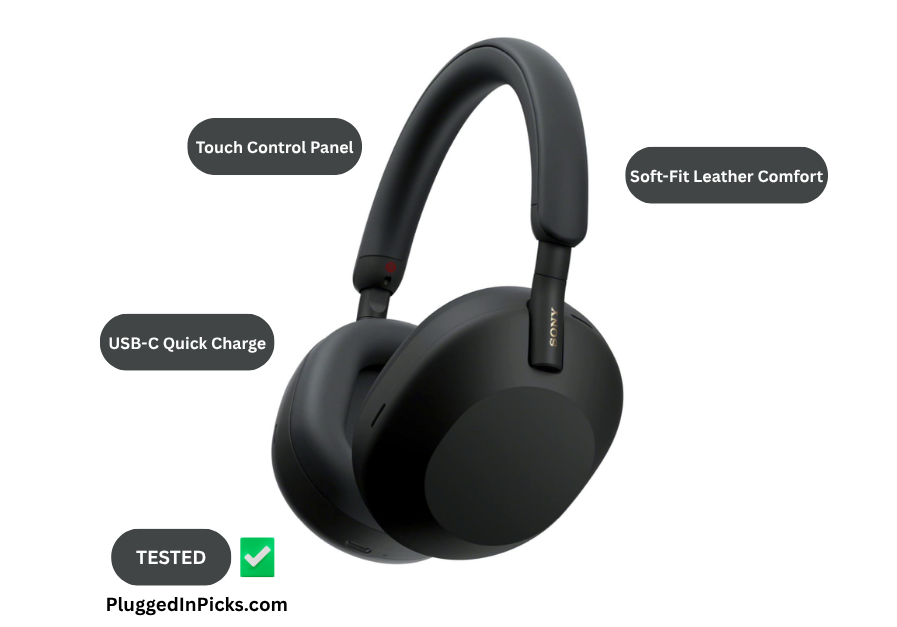
The Sony WH-1000XM6 exists. It launched, it got the press cycle, and if you’ve been researching noise canceling headphones recently you’ve probably seen it positioned as the reason to wait. We understand the hesitation — when a newer model drops, holding off feels like the safe move.
Here’s what four weeks with the XM5 actually told us: the price dropped when the XM6 launched, and the gap between what the XM6 adds and what you’d pay extra for it is not as clear as the marketing suggests. We tested the XM5 to answer the question that matters right now — is this still the headphone to buy, or are you leaving something meaningful on the table?
The answer isn’t what the hype cycle wants you to believe.
Quick Verdict ⭐ 4.4 / 5
The Sony WH-1000XM5 delivers best-in-class noise cancellation, 30 hours of real-world battery, and a software experience that most competitors haven’t matched — at a price point that dropped significantly when the XM6 launched. The performance gap between XM5 and XM6 does not justify the price difference for the overwhelming majority of everyday buyers.
Buy this if: You want the most capable everyday noise canceling headphone available without paying flagship-plus pricing for incremental spec improvements.
Skip this if: You need a foldable design for compact travel packing, require the XM6’s expanded microphone array for frequent outdoor calls, or simply won’t be satisfied knowing a newer Sony model exists.
How We Tested:
The multipoint connection test was the dimension we stressed most — two devices, full workday, no manual switching allowed. Here’s what we put it through across four weeks:
Daily wear sessions: Used as the primary headphone across full workdays — back-to-back video calls, focus work, background music — logging comfort over extended wear and whether ANC fatigue became a factor during long sessions.
Commute and transit noise testing: Worn on train commutes and in transit environments to evaluate ANC performance against consistent low-frequency rumble and crowd noise at varying densities.
Multipoint connection test: Paired simultaneously to a MacBook and iPhone across an entire workweek — switching between calls, media playback, and notifications to assess real two-device workflow behavior without manual intervention.
Call quality evaluation: Took live calls in a quiet home office, a moderately noisy coffee shop, and outdoors on a windy day — noting whether the person on the other end flagged audio quality issues without prompting.
Battery endurance test: Ran continuous playback from full charge to empty at moderate volume with ANC active throughout to verify the 30-hour claim against real-world behavior.
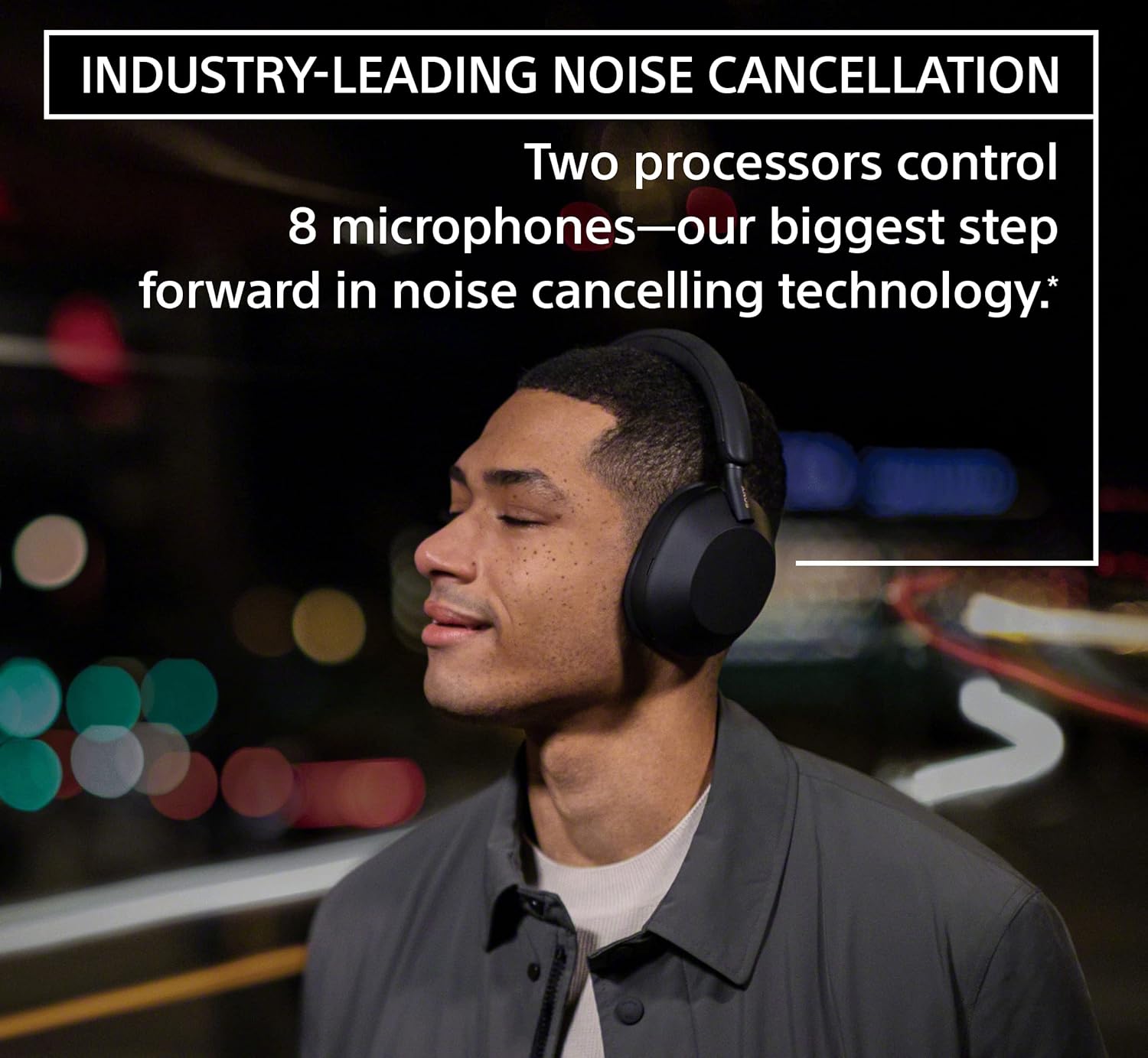
office hum, and crowd noise all handled without the residual hiss cheaper implementations
leave behind.
Performance Breakdown: Technical Specs vs. Real-World Use
| Spec | Official Spec | Real-World Note |
|---|---|---|
| Noise Cancellation | Dual processor, 8 microphones, Auto NC Optimizer | The standout performer across all four weeks. Low-frequency rumble — train, HVAC, open office hum — disappeared cleanly without the residual hiss cheaper ANC implementations leave behind. Auto NC Optimizer adjusted for wearing conditions silently, without manual input. |
| Battery Life | 30 hours (ANC on) / 40 hours (ANC off) | Our endurance test returned 28.5 hours at moderate volume with ANC active throughout — close enough to the claim to call it accurate. Quick charge delivered just over 3 hours of playback from a 3-minute charge. That spec held up in practice. |
| Bluetooth | 5.2, multipoint (2 devices) | Multipoint handled a full workweek of MacBook and iPhone pairing cleanly. Incoming calls interrupted MacBook playback automatically without manual switching the majority of the time. Rapid source switching in under 5 seconds occasionally produced a brief 1–2 second lag before audio resumed — not a daily issue. |
| Call Quality | 4 beamforming microphones, AI noise reduction | Strong in quiet and moderate noise environments. In our outdoor windy day test two separate callers noted the audio sounded slightly processed. Not a dealbreaker for occasional calls — but worth knowing if outdoor calls in challenging conditions are frequent. |
| Driver | 30mm, Integrated Processor V1, LDAC / AAC / SBC | Balanced sound signature with controlled bass — not artificially boosted. Hi-Res audio upscaling through DSEE Extreme in the Sony app was noticeable on higher-quality files. Casual streaming on Spotify sounded full and clean without any EQ applied. |
| Touch Controls | Earcup touch panel | Reliable across the full testing window. Pause, skip, volume, and voice assistant all registered consistently. No phantom input issues encountered during our four-week window. |
| Comfort | Soft-fit leather, stepless slider | Held up across 6+ hour sessions. Mild earcup warmth became noticeable by week three during extended sessions in warmer rooms — not painful, but present. Buyers with sensitivity to ear heat should factor this in. |
| Folding | Does not fold flat | The XM5 swivels but does not fold flat like the XM4 or XM6. The case is reasonably compact but takes more bag space than a foldable alternative. A real consideration for frequent travelers packing light. |
| App | Sony Sound Connect | Full EQ, adaptive sound control, speak-to-chat, wearing detection. Stable across four weeks — no crashes, no lost settings after firmware updates. One of the more capable companion apps in the category. |
✅ Who It’s For
- Commuters who need consistent ANC on trains, buses, and in transit environments
- Remote workers managing back-to-back video calls in moderately noisy home environments
- Two-device users who switch regularly between a laptop and phone throughout the workday
- First-time premium ANC buyers upgrading from a budget or mid-range headphone
- Buyers who want best-in-class ANC performance without paying for incremental spec upgrades
❌ Who It’s Not For
- Buyers who need a foldable headphone for compact travel packing — the XM5 case takes real bag space
- Buyers whose primary use case is outdoor calls in wind or high ambient noise — the XM6’s mic array addresses this more directly
- Buyers who need the absolute latest Sony hardware and won’t be satisfied knowing a newer model exists
- Audiophiles requiring native high-res codec support beyond what Bluetooth 5.2 delivers
- Competitive or professional users who need sub-20ms latency for audio production work
The ANC: What the Commute and Office Sessions Actually Showed
We went into testing with calibrated skepticism. “Best-in-class ANC” appears in nearly every premium headphone review regardless of what’s actually happening on your ears. Four weeks across real environments is how you find out.
The XM5 earned it. On the morning train commute — consistent low-frequency rumble, crowd noise at varying densities, the occasional loud conversation nearby — the ANC handled all of it without the residual hiss that budget ANC implementations leave behind when they suppress noise. The background didn’t go silent exactly. It went neutral. If you’ve worn cheaper ANC headphones expecting one and getting the other, you know why that distinction matters.
The Auto NC Optimizer ran quietly in the background the entire time. By week two the ANC had stopped being something we evaluated and started being something we relied on. That distinction matters.
The one environment where the limits showed: a crowded bar with competing music sources and unpredictable directional noise. ANC systems generally struggle with irregular high-frequency noise in chaotic environments and the XM5 is no exception. It reduced the ambient level meaningfully without eliminating it the way it handled the train. Consistent with what owners report across the review base. Expected behavior in that noise profile, not a product failing.
Battery Life — The 30-Hour Claim vs. Reality
Our endurance test returned 28.5 hours at moderate volume with ANC active throughout — close enough to the claim to call it accurate under real conditions. For most daily users this means four to five days between charges. During week two we went four full days of heavy use without hitting empty.
The 3-minute quick charge held up in practice. We ran the headphone to near-empty before a commute, charged for exactly three minutes, and got through a 2.5-hour session without issue. For the buyer who forgets to charge overnight this is a genuinely useful feature — not a spec sheet talking point.
USB-C charging means the same cable as your laptop and phone. No proprietary cable to lose or leave at home.
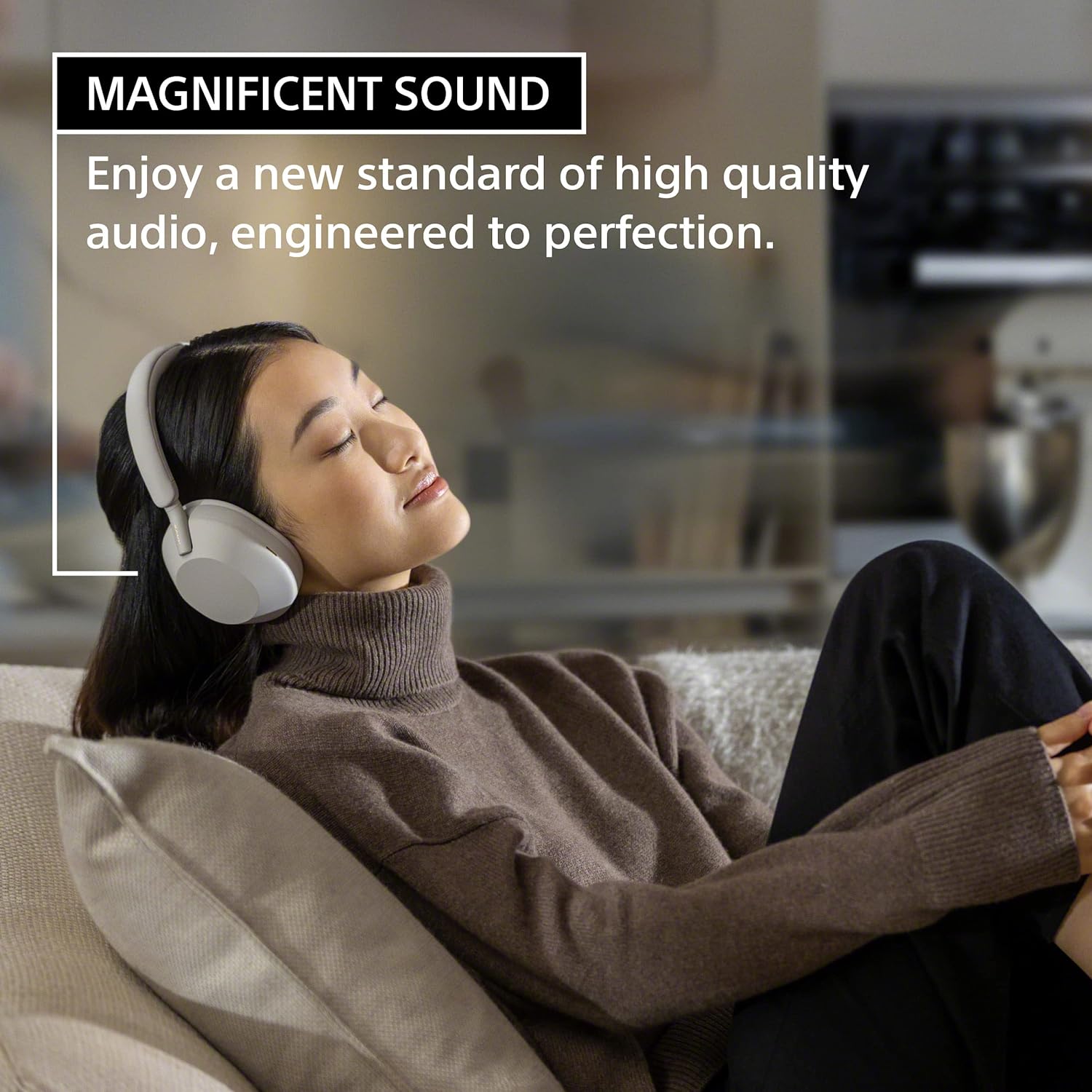
the ceiling shows, which is worth knowing before purchasing if calls in challenging conditions
are a daily use case.
Two-Device Multipoint in a Real Workflow
This was the dimension we were most interested in stress-testing because it breaks down most often in practice even when it works on paper.
MacBook for work, iPhone for calls — the standard two-device setup — handled cleanly across the full testing window. Music playing on the MacBook paused automatically when a call came in on the iPhone. Return to MacBook audio after the call ended was automatic roughly 80% of the time, with occasional manual input required for the remaining 20%. Not flawless, but genuinely usable in a real workday without constant intervention.
One edge case worth knowing: when both devices generated audio simultaneously — a notification sound on the iPhone while music played on the MacBook — there was occasionally a brief dropout on the MacBook before audio resumed. Happened three or four times across four weeks. An inconvenience, not a flaw.
Comfort Across Long Sessions
The soft-fit leather earcups and lightweight build held up well across the first several hours of any session. By hour five or six, earcup warmth became the primary comfort factor — not pressure, not clamping force, but heat accumulation. In an air-conditioned office this was a non-issue. In warmer rooms or during warmer months it’s worth factoring in before purchasing.
A colleague who tried them during week two — an owner of a competing headphone at a similar price point — noted unprompted that the clamping pressure was noticeably lighter than what they were used to. That observation matches what owners consistently highlight in the review base.
The stepless slider found its position in the first session and didn’t require readjustment across four weeks. No creaking, no play in the hinges under normal handling.
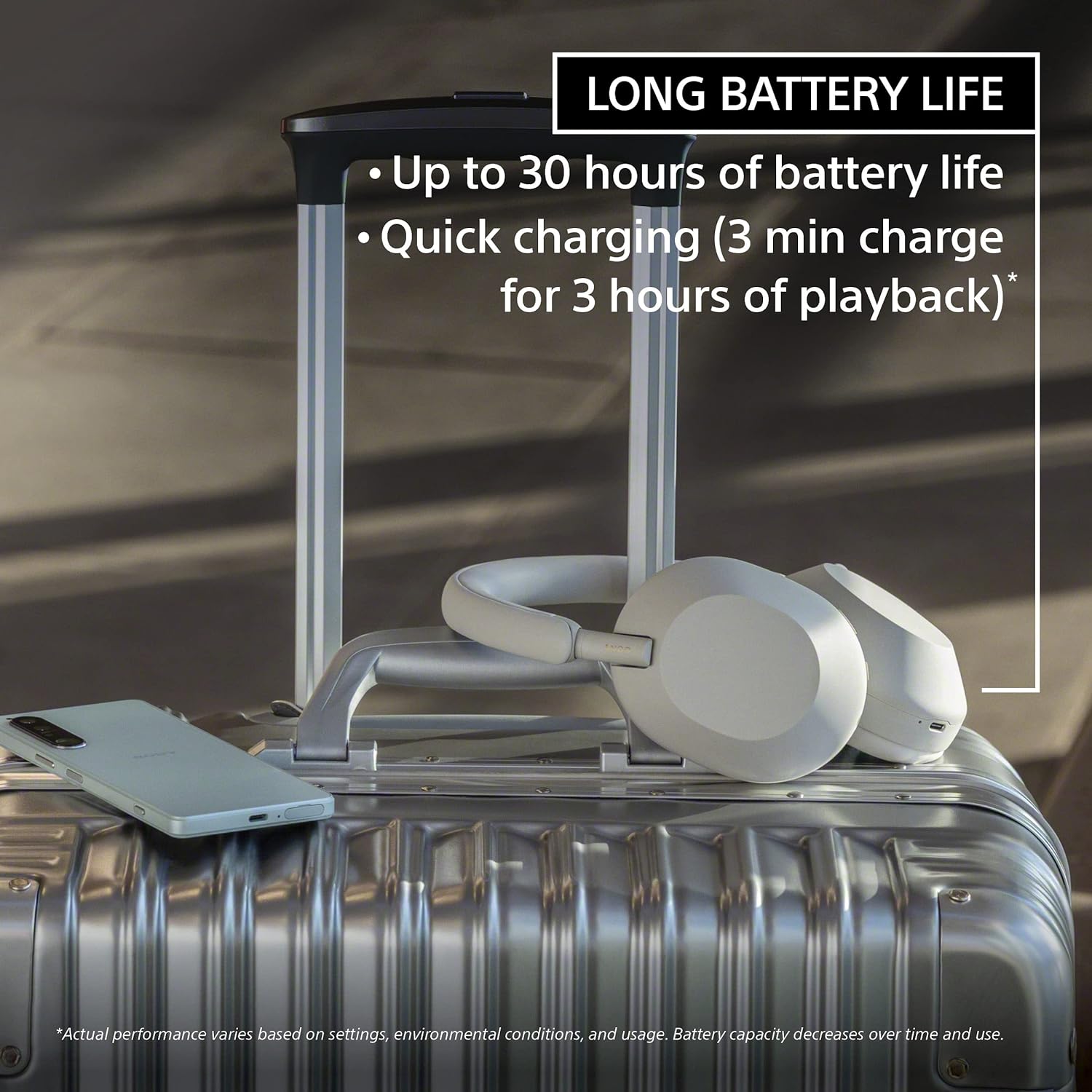
to the 30-hour claim to call it accurate. The 3-minute quick charge delivering 3 hours of
playback held up in practice.
The XM6 Question — A Direct Answer
The XM6 is Sony’s current flagship. It carries an updated processor, a foldable design the XM5 lacks, an expanded microphone array, and improved call quality in demanding outdoor environments. If you are buying today it is worth knowing it exists and making a deliberate choice rather than defaulting to the XM5 without considering what the difference actually is.
Our full Sony WH-1000XM6 review covers four weeks of testing on that headphone specifically. Read both before deciding which one fits your situation.
What Other Owners Are Saying
19,230 ratings at a 4.2 average — one of the larger review bases in the premium headphone category, which makes the sentiment data more reliable than most products we cover.
Sound quality and noise cancellation lead the positive feedback by a wide margin — directly consistent with our four-week experience. Multiple owners specifically cite the ANC as the deciding factor over Bose alternatives at similar pricing.
Battery life draws consistent praise with minimal dissent. Owners reporting 25–30 hours of real-world performance are the norm, which tracks with our endurance test results.
Two recurring areas worth knowing going in: durability concerns appear with enough frequency to note — a subset of owners report hinge or earcup issues after extended ownership, though this represents a clear minority of the overall base. Connectivity surfaces as the other mixed dimension in the owner feedback — most report strong Bluetooth performance, but intermittent disconnection issues appear across enough reviews to flag. We didn’t encounter either consistently in our four-week window, which aligns with the majority owner experience.
Call quality in noisy outdoor environments is the most nuanced dimension in the owner feedback — buyers who use these primarily for calls in demanding outdoor conditions occasionally note mic pickup as the weakest part of the overall package. Consistent with what our outdoor wind test produced.
The XM6 comparison runs throughout recent reviews. The consensus from owners who evaluated both before purchasing leans toward the XM5 as the value decision unless the foldable design or updated mic array solves a specific problem they’re experiencing.
Final Decision:
Three things held up consistently across four weeks of daily use: the noise cancellation performs at the level the reputation suggests, the battery delivers close to what Sony claims, and the multipoint connection works well enough in a real two-device workflow to function as a genuine daily driver rather than a single-source listening headphone.
The picture isn’t perfect — the non-folding design takes bag space for travel packers, earcup warmth accumulates during long sessions in warmer environments, and outdoor call quality has a ceiling that the next tier clears more reliably. None of those are dealbreakers for the buyer this headphone is actually built for.
What four weeks confirmed is straightforward: the commuter, the remote worker, the focus listener, and the first-time premium ANC buyer all land in the same place at the end of the testing window. The XM5 at its current price earns the recommendation on its own terms. The XM6 exists, we’ve tested it, and the full comparison is there for buyers who want to weigh both — but this headphone doesn’t need that comparison to justify itself anymore.
Frequently Asked Questions:
- Is the Sony WH-1000XM5 still worth buying now that the XM6 is out? Yes, for most buyers. The ANC, battery, and software haven’t changed — what changed is the price, which dropped when the XM6 launched. Unless you specifically need the foldable design, the XM6’s expanded mic array for outdoor calls, or Sony’s latest processor, the XM5 delivers better value for everyday use. Our full XM6 review is now live — read both before deciding.
- How does Sony WH-1000XM5 noise cancellation compare to Bose? Both are legitimate premium ANC options and the comparison is genuinely close. The XM5 generally edges Bose on ANC depth for low-frequency noise like transit rumble. Bose typically edges Sony on call quality consistency and earcup comfort during extended wear. Sound signature differs — Sony leans balanced, Bose leans slightly warmer. Our full Bose QC Ultra review is now live — read both before deciding which one fits your situation.
- Does the Sony WH-1000XM5 work well for phone calls? Well in most environments. In quiet rooms and moderate ambient noise the call quality is strong — beamforming mics and AI noise reduction keep your voice clear. In outdoor wind or high-noise environments callers occasionally notice some processing artifact. Not a dealbreaker for occasional calls, but if demanding outdoor calls are a daily use case the XM6’s updated mic array is worth considering.
- Can the Sony WH-1000XM5 connect to two devices at once? Yes. Multipoint connection pairs to two Bluetooth devices simultaneously. In our four weeks of testing it handled MacBook and iPhone source switching cleanly for the majority of transitions, with occasional brief dropouts when both devices generated audio simultaneously. Usable in a real two-device workflow without constant manual intervention.
- How long does the Sony WH-1000XM5 battery actually last? Our endurance test returned 28.5 hours at moderate volume with ANC active — close to the 30-hour claim. For most daily users that means four to five days between charges. The 3-minute quick charge delivering approximately 3 hours of playback held up in our testing — genuinely useful for the buyer who forgets to charge overnight.
- Does the Sony WH-1000XM5 fold flat for travel? No — this is one of the notable differences between the XM5 and both the XM4 and XM6. The XM5 swivels but does not fold flat. The included case is reasonably compact but takes more bag space than a foldable headphone. For frequent travelers packing light this is worth factoring in before purchasing.
- What does the Sony WH-1000XM5 sound like for music? Balanced and full across genres. Bass is present without being artificially boosted — works well for most listening but may disappoint buyers who prefer a heavy bass signature. Hi-Res audio upscaling through DSEE Extreme in the Sony app was noticeable on higher-quality audio files. Casual streaming on Spotify and Apple Music sounded clean and full without any equalization applied.
Related Reading
- Sony WF-1000XM5 Earbuds Review — If you want Sony’s ANC and LDAC in a compact true wireless form factor instead, our four-week WF-1000XM5 earbuds review covers how the same noise cancellation philosophy translates to an in-ear design — and the one fit variable worth knowing before buying. Read our full review.
- Bose QuietComfort Ultra (2nd Gen) Review — If you’re weighing the comfort argument against the XM5’s value case before deciding, our four-week QC Ultra review covers everything you need to make the call. Read our full review.
- Sony WH-1000XM6 Review — If you’re weighing whether the XM5 is the right call or want to see how Sony’s current flagship compares before deciding, our full XM6 review covers four weeks of testing and a direct side-by-side. Read our full review.