
Michelin CrossClimate 2 Review: The Best All-Season Tire for Year-Round Drivers?
By Jake Morrison | Automotive & Outdoor Gear Editor, PluggedInPicks • November 18, 2025
Tested on a 2017 Honda CRV across mixed seasonal conditions — wet roads, light snow, highway miles, and daily commuting.
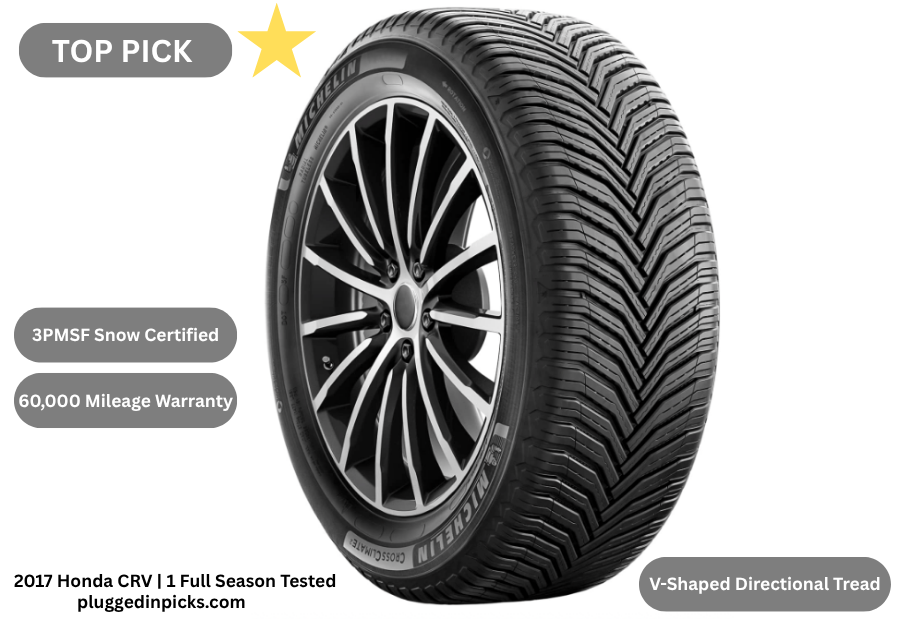
If you live somewhere that gets real winter weather but not enough to justify dedicated snow tires, the Michelin CrossClimate 2 is the tire the industry keeps pointing to. It carries the Three-Peak Mountain Snowflake (3PMSF) rating — the same certification required of dedicated winter tires — while functioning as a full all-season. That’s not a common combination, and it’s the reason this tire gets so much attention.
I’ve run these on my own vehicle through wet commutes, light snow, and highway miles. I’ve also gone deep on verified owner feedback from drivers who’ve put real miles on them in conditions I haven’t — heavy snow, extended highway wear, hot summer pavement. Here’s the full picture.
Quick Verdict
The Michelin CrossClimate 2 delivers on its core promise: a tire that handles genuine winter conditions without sacrificing all-season comfort or wear life. The 3PMSF certification is earned, not marketing — wet braking and light snow traction are noticeably better than a standard all-season. The trade-off is price. These cost more than most competitors in the category. For drivers who deal with real seasonal weather, that premium is justified. For mild-climate drivers who rarely see snow or heavy rain, a standard all-season likely covers the need at a lower cost.
Buy this if: You live in a climate with real winters — regular wet roads, occasional snow, or unpredictable shoulder seasons — and want one set of tires to handle all of it without swapping to winter rubber.
Skip it if: You’re in a mild climate where hard rain is the worst you see, or you’re primarily optimizing for cost. A standard all-season will cover your driving at a lower price point.
How I Tested:
- Vehicle testing: Ran these on my 2017 Honda CRV across a full seasonal rotation — wet highway driving, light snow days, dry summer commuting, and mixed-condition days where conditions changed mid-drive. Paid attention to how the tire behaved at the transition points — the moments where most tires reveal their limits.
- Braking feel: Tested wet and dry stopping from highway speeds. Compared feel against the previous tires on the same vehicle. No instrumented testing — this is driver feel and reaction distance, not measured numbers.
- Noise: Paid attention to road noise across three surface types — smooth highway asphalt, rough concrete, and urban streets with surface variation. Tires have a break-in period; noise observations are from miles 500 onward.
- Snow performance: Light snow only — packed residential streets and one significant slush day. For heavy snow performance and extended winter use, I’m drawing on a consistent pattern of verified owner feedback from drivers in mountain states and the upper Midwest where conditions are more demanding than what I had available.
- Wear tracking: Monitored tread depth across mileage intervals. After one winter and one summer, depth still reads essentially new — these haven’t been asked to show their wear yet.

— those deep channels are what’s moving water out of the contact patch in wet
braking. You can also see the 3D SipeLock sipes cut into each tread block, which
flex under braking but lock together under acceleration to protect tread life.
Performance Breakdown: Technical Specs vs. Real-World Use
| Feature | Spec | Real-World Note |
|---|---|---|
| Season Rating | All-Season + 3PMSF | The 3PMSF is the key differentiator. Most all-season tires don’t carry it. It means this tire meets the same snow traction threshold as a dedicated winter tire. |
| Tread Type | Directional, V-shaped | V-shaped tread channels water out aggressively. Directional tires must be mounted correctly — rotation is front-to-rear only, not cross-rotation. |
| Tread Depth | 10/32nds | Above average for an all-season at new. More tread depth means longer useful life before replacement threshold. |
| Treadwear Warranty | 60,000 miles | One of the stronger warranty figures in this category. Michelin backs it with a 6-year standard limited warranty as well. |
| Load Capacity | Up to 1,521 lbs (size-dependent) | More than adequate for passenger cars, CUVs, and SUVs. Confirm your specific size’s load index before purchasing. |
| Speed Rating | V (up to 149 mph, size-dependent) | Higher than most drivers will need. V-rating tires typically run stiffer and quieter than lower-rated options. |
| Noise Technology | PIANO Acoustic Tuning | Noticeably quieter than expected for a tire with aggressive wet-weather tread. The acoustic tuning is real — highway drone is low. |
| 3D SipeLock Technology | Yes | Sipes flex during braking and cornering but lock together under acceleration. Better treadwear than open-sipe designs. |
| Maximum Pressure | 50 PSI (size-dependent) | Standard — follow your vehicle’s door placard, not the tire’s max. |
| Available Sizes | Multiple — R16 through larger | Size-specific specs vary. The fundamentals covered here apply across the lineup. |
✅ Who It’s For
- Drivers in four-season climates with real winter weather
- Anyone who wants one tire set year-round without winter swaps
- CUV and SUV owners who want 3PMSF certification
- Highway commuters who value a quiet, comfortable ride
- Anyone who’s had a close call in wet or snowy conditions on standard all-seasons
❌ Who It’s Not For
- Mild-climate drivers who rarely see snow or heavy rain
- Anyone who already runs dedicated winter tires seasonally
- Budget-focused buyers — there are cheaper all-seasons for mild conditions
- Performance drivers who prioritize handling over all-weather safety
- Anyone whose vehicle requires a size not available in the CrossClimate 2 lineup

flush against the rim without bulging, which tracks with the planted feel on
highway lanes. Clean fitment on a standard rim width.
Wet and Snow Performance — Where This Tire Earns Its Price
The first real test came the morning after the first snow of the season. Driving the CRV out of the neighborhood and onto the highway, the thing I noticed immediately was what wasn’t happening — no pull left or right, no searching, no that familiar moment where the front end floats before it finds grip. The CrossClimate 2 just tracked. Braking felt meaningfully more confident than my previous set in the same conditions — not marginally, noticeably. The kind of difference that makes you trust the car again in weather that used to make you cautious.
For heavy snow performance — sustained accumulation, icy secondary roads, mountain driving — the verified owner feedback from drivers in the upper Midwest and mountain states is consistent: these tires outperform standard all-seasons significantly in those conditions. The 3PMSF isn’t just a number on a sidewall for this tire. That said, they are not a replacement for dedicated winter tires in extreme winter conditions. Drivers in severe winter climates still benefit from a seasonal swap.
Dry and Highway Performance
On dry highway miles the CRV runs quiet and planted. No drama, no vagueness in lane changes. The directional tread pattern and 3PMSF-optimized compound are slightly firmer than the softest touring all-seasons on the market — if you’re coming from an ultra-comfort touring tire there’s a small adjustment — but it’s not harsh. It’s the trade-off that comes with a tire built to perform across a wider range of conditions, and on regular highway driving it’s not something you notice after the first week.
Road Noise
First impression at mount was loud — noticeably so. That’s normal for a new tire with this tread depth and it’s worth knowing going in so it doesn’t catch you off guard. By the first few hundred miles it settled into something significantly quieter. Highway cruising in the CRV is genuinely calm.
PIANO Acoustic Tuning is doing real work here. Rough concrete adds some drone as it does with any tire, but smooth highway asphalt is noticeably quiet for a tire with this level of tread aggression. Verified owners across multiple sizes call this out consistently — it’s not just a CRV thing.
Tread Life
After one winter and one summer of regular driving, tread depth still reads essentially new. These haven’t been asked to show their wear yet. The 60,000-mile warranty and 10/32nds starting depth give a long runway — but the honest answer is one season isn’t enough to call long-term wear. What I can say is there’s no premature or uneven wear showing after the first full rotation cycle, which is the first thing to watch for with a directional tire.
For long-term wear data, the verified owner feedback base is the more reliable source at this stage. The pattern there is consistent with what the warranty implies — these hold up.
Getting Them Installed Through Amazon
One thing worth knowing: Amazon offers professional installation through local shops when you purchase tires. At checkout, you can add installation and balancing from a participating provider near you. Pricing varies by location — check the current options at checkout for your area.
The process is straightforward: Amazon ships the tires directly to the installation shop, you schedule your appointment, and show up. For most buyers, this removes the hassle of coordinating between a tire retailer and an installer. It’s not available in every area, but if it’s offered at checkout for your location, it’s worth considering over the logistics of handling tire shipping yourself.
What Other Owners Are Saying
Across hundreds of verified reviews, the pattern is consistent: wet and snow traction, road noise, and long-term wear are the three things owners come back to praise. Drivers who switched from standard all-seasons specifically call out the difference in wet braking and light snow confidence. Several owners in mountain states and the upper Midwest note these as the first all-season tire they’ve trusted through a real winter.
The main friction point in the feedback is price. These cost more than most all-seasons, and some owners note that for mild-climate driving the premium is harder to justify. That’s an honest trade-off — the CrossClimate 2 is built for drivers who need the all-weather capability, not for drivers who want a capable all-season at the lowest possible cost.
A small number of owners in warm-climate states mention slightly firmer ride quality compared to their previous touring tires. That tracks with what the compound is optimized for — all-season performance trades a small amount of the ultra-soft comfort feel of a pure touring tire.
CrossClimate 2 vs. Defender 2 — Which Michelin Is Right for You?
These are Michelin’s two flagship all-season options and they serve different priorities. The CrossClimate 2 is built around all-weather versatility — it carries the 3PMSF rating and performs genuinely well in wet and light snow conditions. The Defender 2 is optimized for longevity and ride comfort in mild climates — a longer-wearing, softer-riding tire built for everyday highway use where winter weather isn’t a significant factor.
If you see real winters — regular wet roads, occasional snow, unpredictable shoulder seasons — the CrossClimate 2 is the stronger choice. If you’re primarily in a mild climate and prioritizing long wear life and a plush ride, the Defender 2 is worth a look. See our full Michelin Defender 2 review for the complete breakdown.

is above average for an all-season at new. The shoulder blocks are substantial
enough that you can see why this tire holds its line in wet cornering without
feeling vague.
Final Decision:
The Michelin CrossClimate 2 is a genuinely well-executed tire that delivers on a specific and difficult promise: all-season usability with real winter capability. The 3PMSF certification is earned through actual traction performance, not just compound chemistry, and the wet braking advantage over standard all-seasons is noticeable in real driving conditions. The PIANO Acoustic Tuning keeps road noise lower than the tread aggression would suggest, and the 60,000-mile warranty puts long-term value in a better position than the upfront price implies.
These cost more than most all-season alternatives, and in mild climates where hard rain is the worst you regularly see, that premium is harder to justify. They’re also a directional tire, which limits rotation options and adds a step of care at every service interval. And while they perform well in light-to-moderate snow, drivers in severe winter climates with heavy sustained snowfall are still better served by a seasonal switch to dedicated winter tires.
Go in knowing what they’re built for — year-round performance in a climate with real seasonal variation — and they consistently deliver on that promise. For four-season drivers who want to stop worrying about what the weather is doing, these are the standard the category is measured against.
Frequently Asked Questions:
- Is the Michelin CrossClimate 2 a winter tire? No — it’s an all-season tire that carries the Three-Peak Mountain Snowflake (3PMSF) certification. That certification means it meets the same snow traction threshold required of dedicated winter tires. In practice it handles wet roads and light-to-moderate snow significantly better than a standard all-season. For severe winter climates with heavy sustained snowfall or significant ice, a dedicated winter tire is still the stronger choice.
- Are Michelin CrossClimate 2 tires quiet? Yes — notably so for a tire with this level of tread aggression. They run loud for the first few hundred miles at mount — that’s normal and worth knowing going in. After break-in, highway cruising is genuinely calm. PIANO Acoustic Tuning reduces highway noise, and verified owners across multiple sizes consistently call these out as quieter than expected.
- Are Michelin CrossClimate 2 tires directional? Yes. The V-shaped tread pattern is directional, which means the tires must be mounted in the correct rotational direction and rotation is front-to-rear only — no cross-rotation. Make sure your installer is aware of this at mounting and at every rotation.
- How long do Michelin CrossClimate 2 tires last? Michelin backs these with a 60,000-mile treadwear limited warranty, which is stronger than most in this category. After one full winter and summer of driving, tread depth still reads essentially new. Actual long-term wear depends on driving style, road surfaces, load, and rotation schedule. Rotating front-to-rear on your vehicle’s recommended interval is especially important with directional tires.
- Where are Michelin CrossClimate 2 tires made? Michelin manufactures tires across multiple facilities globally, including plants in the United States. The manufacturing location for a specific tire varies by size and production run — check the sidewall marking on your specific tire for the country of manufacture.
- How do I get Michelin CrossClimate 2 tires installed? Amazon offers professional installation from local participating shops at checkout when you purchase tires. The tires ship directly to the installer, you schedule your appointment, and show up. Pricing varies by location — check the options at checkout for your area. If Amazon installation isn’t available near you, any tire shop can mount and balance these — just confirm they’re familiar with directional tire mounting requirements.
- What size CrossClimate 2 do I need? Check your vehicle’s door placard or owner’s manual for the recommended tire size. The CrossClimate 2 is available across a wide range of sizes for passenger cars, CUVs, and SUVs.
- How does the CrossClimate 2 compare to the Defender 2? The CrossClimate 2 prioritizes all-weather capability including 3PMSF snow certification. The Defender 2 prioritizes longevity and ride comfort in mild climates. See our full Michelin Defender 2 review for a detailed side-by-side breakdown.
Related Reading
- Michelin Defender 2 — if your climate is mild and longevity is the priority, our Defender 2 review covers the full comparison
- Noco GB40 Jump Starter — winter driving confidence means being prepared for the cold killing your battery too; our GB40 review covers the best compact jump starter for keeping in the trunk
- Airmoto Tire Inflator — tires lose pressure faster in cold weather than any other season; our Airmoto review covers the best portable inflator for staying ahead of it without a trip to the gas station