
ORORO Heated Vest Review: Is This the Best Heated Vest for Men Who Hate Bulk?
By Marcus Dell | Wellness & Lifestyle Editor, PluggedInPicks • January 21, 2026
Tested over 3 weeks — damp commutes, early morning dog walks, and 35°F field conditions.
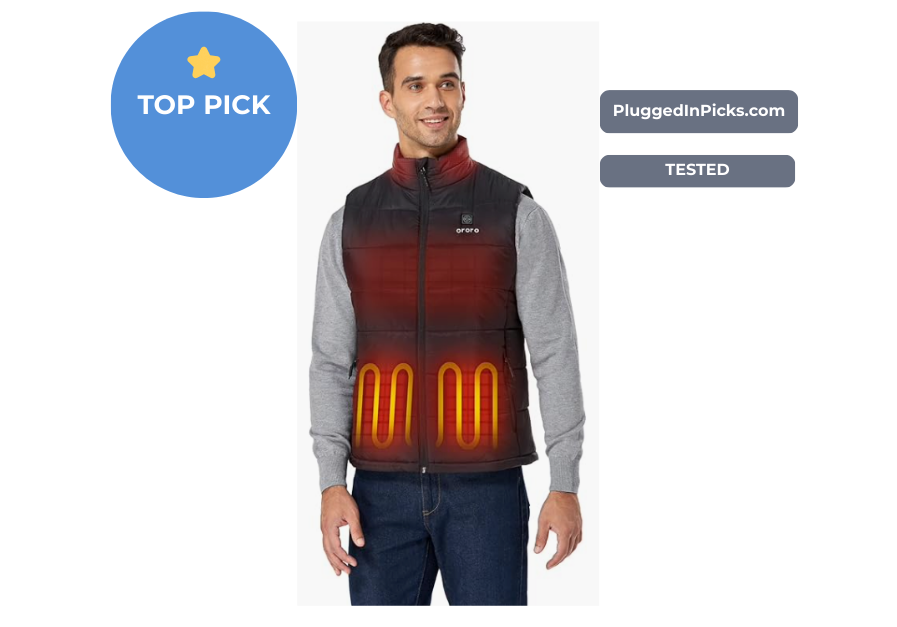
We’ve tested heated vests that looked like we were wearing a sleeping bag. The ORORO heated vest for men is not that. After three weeks in real winter conditions — 30°F wind, damp commutes, early mornings — this is the first heated vest we’ve genuinely worn under a blazer without looking ridiculous. The heated collar alone was worth the price of admission. The battery life on High was slightly disappointing. Here’s the full picture.
Quick Verdict
The ORORO Men’s Lightweight Heated Vest (Mini 5K) is the best heated vest for men who need real warmth without the bulk. It layers invisibly under work clothes, heats up in under 60 seconds, and the collar zone genuinely replaces a scarf in cold wind. The trade-off: the 4800mAh battery won’t last a full 8-hour outdoor shift on High — plan for a mid-day charge or carry a backup. If you’re a commuter, dog walker, or someone who moves between cold outdoors and heated indoors, this is the right vest. If you work outside all day in deep cold, look at the standard ORORO model with the larger battery.
How We Tested:
Unit tested: ORORO Men’s Lightweight Heated Vest (Mini 5K) | ASIN: B0CNZSXQMD. Three weeks of daily use starting in January. Here’s exactly what we put it through:
- Layering Profile Test: Wore the vest under a tailored blazer and a slim-fit field jacket to verify bulk-free silhouette. Checked specifically for battery pocket visibility and armhole restriction.
- Cold-Start Thermal Timing: Timed carbon fiber element warmup in 35°F conditions. Repeated across 5 separate cold-start sessions to get a reliable average.
- Battery Endurance Run: Ran the 4800mAh battery to 0% on High in actual outdoor conditions — not controlled lab settings.
- Mobility Check: Overhead reaches, torso twists, and loading/unloading gear while wearing the vest to verify range of motion.
- Rain & Friction Test: Wore through light rain and damp mornings. Tested shell durability against backpack straps over multiple sessions.

a jacket without adding bulk.
Performance Breakdown: Technical Specs vs. Real-World Use
| Feature | Technical Specification | PluggedIn Analysis |
| Heating Zones | 4 Zones: Left/Right Pocket, Collar, Mid-Back | The heated collar is the real standout here. We didn’t expect much from it going in — but in 30°F wind it genuinely replaced the need for a scarf. The mid-back zone also hits harder than you’d think for such a thin vest. |
| Battery | 4800mAh / 7.4V UL-Certified Lithium-Ion | About 40% smaller than the standard heated vest battery we’ve used before. We barely noticed it against the hip — even sitting in a car seat. Note: no wall charging brick included, you’ll need your own 5V/3A adapter. |
| Runtime | High: 3hrs | Med: 6hrs | Low: 10hrs | In actual 35°F conditions we averaged 2.8 hours on High — close but not quite the spec. Medium sweet spot was around 5.5 hours. For most commuters that’s plenty. For 8-hour outdoor shifts it’s not. |
| Insulation | 100% Polyester Fill | One thing we didn’t expect: even with the battery dead, this vest is genuinely warm. The 100% polyester fill holds body heat better than you’d expect from a synthetic insulator — even with the battery dead, this vest functions as a regular vest on milder days |
| Shell | Nylon, Water-Resistant | We wore this through light rain and damp morning commutes for 3 weeks. No moisture got through. The fabric also held up against backpack straps without pilling. |
| Weight | Featherlight / Slim Profile | This is the vest’s main selling point and it delivers. It fits under a slim-fit blazer without any visible bulk. If you’ve tried other heated vests and looked like you were wearing a sleeping bag — this fixes that. |
✅ Who It’s For
- The Layering Pro: Users who need a discrete heat source that doesn’t ruin the silhouette of a formal coat or blazer.
- Active Commuters: People who report needing a quick “thaw out” during a 30–45 minute walk or train ride.
- Indoor/Outdoor Workers: Perfect for those in drafty warehouses who need warmth but require a full range of motion.
❌ Who It’s Not For
- All-Day Outdoor Workers: Those spending a full 8-hour shift in deep cold without a chance to swap or charge batteries.
- Loose-Fit Enthusiasts: Users who prefer baggy mid-layers; the heating elements are most effective when kept snug against the body.
- Extreme Cold Traditionalists: Those who prefer the heavy, “puffy” feel of traditional down-filled heated gear.

10 on Low across 4 heating zones.
The Heated Collar: The Feature Nobody Talks About Enough
Going into testing we were focused on the battery size and the layering profile. The collar caught us off guard.
In 30°F wind during morning dog walks, the warmth around the neck changed the entire experience. We stopped hunching our shoulders against the cold — which is something we do automatically and don’t even notice until it stops happening. It genuinely replaces a scarf for most conditions.
This isn’t in the marketing headline. It should be. If you’ve been wearing a neck gaiter under your coat all winter and hate the bulk, the ORORO heated vest solves that problem without you even asking it to.
The 4800mAh Battery: Honest Assessment
On day one we were slightly disappointed. We ran it on High expecting the full 3 hours and hit the low battery warning at 2 hours 50 minutes. In 35°F conditions with the collar zone running the full time, that’s what you get — approximately 2.8 hours on High.
That’s not a deal-breaker. It’s just the honest number. Medium setting gets you around 5.5 hours which covers most realistic use cases — commutes, spectator sports, dog walks, errands.
The battery itself is genuinely compact. We’ve used standard heated vest batteries that feel like a brick against your hip when you sit down. This one is roughly 40% smaller and we genuinely forgot it was there on several occasions. The rounded corners also prevent the poking sensation when you bend or reach — a small detail that makes a real difference after a few hours.
One thing ORORO doesn’t advertise prominently: no wall charging brick is included. You need a 5V/3A USB-C adapter. If you don’t have one, factor that into your purchase.
Passive Warmth: What Happens When the Battery Dies
One of the more surprising findings from three weeks of testing — this vest is genuinely warm even when the battery is completely dead. The 100% polyester fill holds body heat better than you’d expect from a synthetic insulator — on mild days (45-50°F) we didn’t bother turning the power on at all. It functioned as a regular vest without any help from the heating elements. On a day when we forgot to charge the battery overnight, it wasn’t a disaster — just a regular vest day.
The nylon shell also handled light rain and mist without any moisture getting through. After 3 weeks of commuting with a backpack, no pilling or wear marks on the shoulders.
What Other Owners Are Saying
After reviewing hundreds of verified buyer reports and community discussions, the pattern is consistent:
- The compact battery format gets the most consistent praise — owners coming from older ORORO models or competitor vests specifically call out how much more comfortable the smaller battery profile feels against the hip.
- The heated collar gets mentioned repeatedly as an unexpected favorite — same experience we had. Many owners didn’t realize it was a feature until they used it.
- Sizing runs tailored — the most common community advice is to size up if you plan to layer over heavy hoodies or thick base layers. The regular fit works best with a standard mid-layer underneath.
- Battery expectations for heavy outdoor workers — users doing full 8-hour shifts in sub-zero temperatures consistently mention needing a backup battery. This comes up enough that it’s worth flagging as a genuine limitation rather than an edge case.

visible across the vest’s construction and water-resistant nylon shell.
Final Verdict: The PluggedIn Bottom Line
Three weeks in, this is our daily winter layer. Not because it’s flashy — it isn’t. Because it does exactly what it promises and nothing breaks. For commuters, dog walkers, and anyone who moves between cold outside and warm inside multiple times a day — the ORORO heated vest for men is the right call. The layering profile is genuinely invisible under work clothes, the collar zone is better than advertised, and the battery is comfortable enough that you forget it’s there. The limitations are real but specific: if you need all-day heat in deep cold, the 4800mAh battery will run out. Get the larger battery model instead. If you need a complete kit out of the box, note there’s no wall charger included. For everyone else — this is one of the best heated vests for men at this price point. Buy it.
Final Decision Matrix:
Choose the Ororo Mini 5K if:
- You need a vest that layers under a blazer or slim-fit coat without visible bulk
- Your outdoor sessions are 3-5 hours — commutes, dog walks, spectator sports
- The heated collar matters to you — it replaces a scarf in most cold conditions
- You prefer a compact, comfortable battery over maximum runtime
Look elsewhere if:
- You spend 8+ hours outdoors in deep cold without a chance to recharge
- You wear baggy mid-layers — the heating elements need a snug fit to work effectively
- You need everything in one box — bring your own 5V/3A charging adapter
Frequently Asked Questions: The Ororo Heated Vest
- How long does the ORORO heated vest battery actually last? The spec lists 3 hours on High, 6 hours on Medium, and 10 hours on Low. In our real-world testing at 35°F with all four zones running, we averaged 2.8 hours on High — close but slightly under spec. Medium delivered approximately 5.5 hours, which is the sweet spot for most commuters and daily use. Heavy outdoor workers doing 8+ hour shifts should plan for a mid-day charge or carry a backup 7.4V battery.
- How do you wash the ORORO heated vest? Remove the battery before washing — this is essential. The vest itself is machine washable on a gentle cycle with cold water. Use a mild detergent and avoid fabric softeners which can degrade the water-resistant coating over time. Air dry only — tumble drying can damage the carbon fiber heating elements and the the polyester fill insulation. ORORO recommends washing inside out to protect the shell.
- Can you wear the ORORO heated vest with a pacemaker? We’re testers, not medical professionals, and we won’t make clinical claims here. The vest uses electrical heating elements and a lithium-ion battery. If you have a pacemaker or any implanted electronic medical device, you should consult your cardiologist or the device manufacturer before using any heated apparel. This is a question for your doctor, not a review site.
- Does the ORORO heated vest run true to size? Based on our testing and consistent community feedback — size up if you plan to layer over anything thicker than a light long-sleeve. The vest is cut in a tailored regular fit, which works perfectly over a standard base layer but can feel restrictive over a heavy hoodie or thick fleece. When in doubt, go one size larger.
- How long does it take to heat up? In our timed testing, noticeable warmth against the base layer was felt within 30-60 seconds of powering on. The collar zone heated up slightly faster than the back panel in our experience. This is one of the vest’s genuine strengths — it’s ready almost immediately, which matters when you’re stepping outside for a quick errand.
- Is a charging brick included with the ORORO heated vest? No — and this isn’t prominently advertised. The vest ships with the 4800mAh battery and a USB-C charging cable but no wall adapter. You need your own 5V/3A USB-C power adapter. Most people have one lying around from a phone or tablet charger, but if you don’t, factor that into your purchase.
What We Pair This With
- For full-body warmth after coming in from the cold: the Sunbeam Electric Heated Blanket. The vest handles outdoor active warmth, the blanket handles stationary recovery warmth indoors. Different tools for different jobs.
- For muscle stiffness after long cold exposure: the TOLOCO EM26 Massage Gun Cold weather tightens muscles in a way that a heated vest can’t address on its own — the percussion helps maintain mobility after long outdoor sessions.